
We embark on a fascinating journey today, delving into the subtle yet significant world of the Coriolis effect as it pertains to extreme long-range shooting with a .300 Winchester Magnum. For many, the idea that the Earth’s rotation can influence a bullet’s trajectory seems almost fantastical, relegated to meteorology or naval artillery. Yet, as we push the boundaries of precision and distance, these once-ignored forces become critical factors for success. Our focus here isn’t merely academic; it’s about understanding how to achieve surgical accuracy when a bullet is in flight for an extended period, traversing vast distances where every inch matters.
The Subtle Hand of Earth’s Rotation: Coriolis Effect Explained
At its heart, the Coriolis effect is an apparent force that deflects moving objects in a rotating frame of reference. For us, the “moving object” is our bullet, and the “rotating frame of reference” is our planet, Earth. It’s not a real force in the Newtonian sense, but rather a consequence of observing motion from a non-inertial frame. Imagine standing on a spinning carousel and trying to throw a ball in a straight line to someone across from you; to an outside observer, the ball travels straight, but to you and your friend on the carousel, its path appears curved. This is analogous to how a bullet fired from a fixed point on Earth appears to drift relative to its intended path.
This deflection is directly proportional to the object’s velocity, the sine of the latitude, and the angular velocity of the rotating frame. For a bullet, this translates to a trajectory deviation that increases with flight time, latitude, and the speed of the Earth’s rotation. While seemingly complex, the practical implications for us, as long-range shooters, can be boiled down to a predictable shift in our point of impact, both horizontally and vertically, depending on our location on the globe and the direction we’re shooting.
Factors Influencing Coriolis Deflection
Several key variables dictate the magnitude of Coriolis deflection on a bullet. First and foremost is the time of flight. This is the primary driver; the longer the bullet is airborne, the more time the Earth has to rotate beneath it, and thus, the greater the apparent deflection. This is precisely why the effect becomes increasingly relevant as we stretch the capabilities of cartridges like the .300 Win Mag to extreme ranges.
Next is latitude. The Coriolis effect is strongest at the poles and diminishes to zero at the equator. This means a shot fired in Alaska will experience a greater deflection than an identical shot fired in Florida, assuming all other factors are equal. Our position on the globe fundamentally dictates the rotational velocity component that impacts our bullet.
Finally, the azimuth, or direction of fire, plays a crucial role. A shot fired due north will experience a different vertical and horizontal deflection than one fired due east or west. As we will discuss, the orientation relative to the Earth’s spin dictates how the apparent force acts on the projectile. Understanding these interdependencies is the first step in mastering extreme long-range ballistics.
Hemisphere-Specific Rules of Thumb
The direction of deflection is consistently tied to the hemisphere we find ourselves in. In the Northern Hemisphere, all shots not fired exactly east or west will deflect to the right. This means a bullet fired north, south, or at any angle in between will show a rightward shift. Conversely, in the Southern Hemisphere, the deflection is consistently to the left. This is a fundamental rule that ballistic solvers incorporate and one we must internalize for accurate shooting.
Beyond the lateral shift, there’s also a vertical component that is often less intuitive but equally important. Shooting east generally causes the bullet to impact low, while shooting west causes it to impact high at the same distance. This vertical component arises from the interaction of the bullet’s velocity with the Earth’s rotation in the east-west plane, influencing the perceived gravitational pull. Ignoring this can lead to significant elevation errors, especially at ultra-long distances.
The Coriolis Effect plays a significant role in long-range shooting, particularly when using cartridges like the .300 Win Mag at extreme distances. Understanding how the Earth’s rotation affects bullet trajectory can be crucial for accuracy in competitive shooting or hunting scenarios. For more in-depth insights on this topic, you can explore a related article that delves into the intricacies of long-range shooting and the factors that influence it. Check it out here: .300 Win Mag Shooting at Extreme Distance.
The .300 Win Mag at the Edge: When Coriolis Enters the Equation
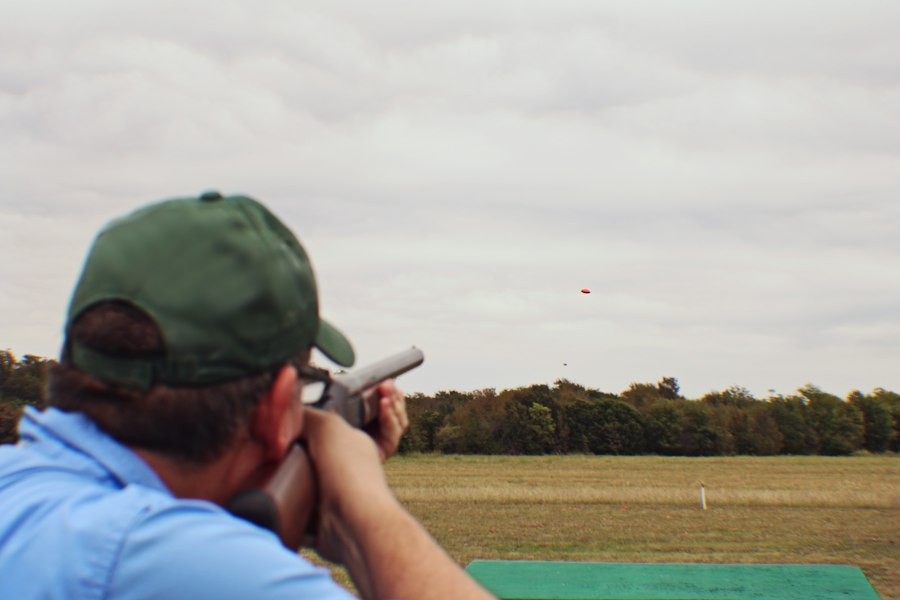
The .300 Winchester Magnum is a venerable cartridge, renowned for its flat trajectory, ample energy, and accuracy, making it a favorite for long-range hunting and precision shooting alike. When we push this cartridge to its limits, beyond 1,000 yards and into the realm of 1,500, 2,000, or even 2,500 yards, the flight times become substantial. It is precisely these extended flight times that transition the Coriolis effect from an academic curiosity to a practical consideration.
Modern consensus, supported by leading ballisticians like Bryan Litz, suggests that for most long-range shots, even past 1,000 yards, Coriolis is often “lost in the noise” of more dominant environmental factors such as wind variability and accurate range estimation. However, this perspective changes dramatically for “very small targets, very long ranges, and low-wind conditions.” In scenarios where a miss by even a few inches means failure, or when attempting record-setting shots, the Coriolis effect demands our attention.
Practical Significance Around 1,000 Yards
For shooters regularly stretching a .300 Win Mag to the 1,000 to 1,500-yard mark, empirical testing has provided valuable insights into the magnitude of Coriolis deflection. Instrumented testing around 1,000 yards has found lateral Coriolis deflection on the order of 3–4 inches. This is accompanied by a few inches of vertical effect on pure east-west shots. These values are indeed on the edge of practical significance.
Consider a 1 MOA target at 1,000 yards, which translates to approximately 10 inches. A 3-4 inch deflection, while not catastrophic, represents a substantial portion of that target. For high-precision work, where we are aiming for the center of a small plate or a vital zone on game, these inches can be the difference between a hit and a miss. In calm, stable conditions where other variables are well-controlled, ignoring these few inches would be a disservice to our precision efforts.
Beyond 1,500 Yards: Coriolis Becomes Critical
As we push the .300 Win Mag even further, into the 1,500 to 2,000+ yard range, the flight times increase dramatically, and with them, the significance of the Coriolis effect. At these extreme distances, the bullet can be airborne for 2.5, 3, or even 4 seconds or more, allowing the Earth’s rotation to exert a truly noticeable influence. For such extended flight durations, the spin of the Earth can move the point of impact by several inches to over a foot, depending on the direction of fire and latitude.
For example, ELR calculations (which are not caliber-specific but are representative of .300-class flight times) show that at approximately 3,871 yards, a very significant correction of about 1.0 mrad vertical (around 3.4 MOA, or roughly 11 feet) and 0.4 mrad horizontal (about 1.4 MOA, or roughly 4.5 feet) of Coriolis correction could be required. While 3,871 yards is well beyond the typical practical range for a .300 Win Mag, this example vividly illustrates how exponentially the effect scales with distance and flight time. Even at more common ELR distances for the .300 Win Mag, say 1,800 to 2,000 yards, we are looking at corrections measured in feet, not inches. Failing to account for this can mean missing the target by a wide margin, even with otherwise perfect wind and elevation calls.
Integrating Coriolis into Our Ballistic Solutions
Given the increasing importance of Coriolis at extreme distances, how do we practically incorporate it into our shooting solutions? The answer lies in modern ballistic solvers. These sophisticated programs are no longer just glorified drop charts; they are powerful computational tools capable of accounting for a multitude of environmental and dynamic factors, including the subtle forces of Earth’s rotation.
Most contemporary ballistic applications allow us to enable Coriolis (and Eötvös) corrections. To do this effectively, we need to input specific data points: our exact latitude, the azimuth (direction) of our shot, and our muzzle velocity. With this information, the solver can calculate the precise magnitude and direction of the Coriolis deflection for our specific bullet and engagement. This is strongly recommended when pushing a .300 Win Mag into ELR territory (beyond approximately 1 mile or 1,600 meters), where flight times typically exceed 2 to 2.5 seconds.
The Eötvös Effect: A Companion Force
While our primary focus is on the Coriolis effect, it’s worth briefly mentioning its close relative, the Eötvös effect. This phenomenon also arises from the Earth’s rotation and affects the vertical trajectory of a projectile. It accounts for the change in perceived gravity due to our velocity relative to the rotating Earth. When we shoot east, our projectile effectively gains additional eastward velocity relative to the Earth’s rotation, reducing the apparent gravitational pull and causing it to impact higher. Conversely, shooting west means our projectile is moving against the Earth’s rotation, increasing the apparent gravity and causing it to impact lower.
Modern ballistic solvers typically calculate both Coriolis and Eötvös effects simultaneously when enabled. While the Eötvös effect primarily manifests as a vertical correction, its interplay with Coriolis ensures a more complete and accurate ballistic solution for extreme distances. Understanding that these two effects are often bundled together in advanced solvers is key to leveraging their full potential.
Data Input for Precision
The accuracy of our ballistic solver’s Coriolis correction is entirely dependent on the quality of the input data. We need to know our precise latitude at the shooting location, not just a general regional estimate. GPS devices or mapping applications can provide this with high accuracy. Similarly, the exact azimuth (direction of fire) is critical. A compass reading or a laser rangefinder with an inclinometer and azimuth function can provide this. Small errors in azimuth can lead to significant errors in the calculated Coriolis deflection, especially the horizontal component.
Finally, a precise muzzle velocity (MV) for our specific load is paramount. MV directly influences the flight time, which, as we’ve established, is the primary driver of Coriolis magnitude. Chronographing our load meticulously under various conditions, or using a robust MV calibration process, ensures that our solver has the most accurate time-of-flight estimation. Overlooking any of these data points can introduce errors that negate the benefit of using a Coriolis correction in the first place.
Case Study: A .300 Win Mag at 1,500 Yards
Let’s consider a hypothetical scenario: we are shooting a .300 Win Mag with a 200-grain ELD-X bullet at a muzzle velocity of 2,900 fps, located at 40 degrees North latitude (a common latitude for many US long-range shooting ranges), and aiming at a target 1,500 yards away. We will examine the Coriolis effect under two different firing directions.
First, let’s assume we are firing due North. At 1,500 yards, our bullet will have a flight time of approximately 2.3 to 2.5 seconds (depending on exact BC and environmental factors). For this scenario, a ballistic solver would predict a lateral Coriolis deflection to the right in the Northern Hemisphere, likely in the range of 5 to 8 inches. The vertical component would be relatively minor for a purely North shot, though still present. This means if we aim dead-on without correction, our bullet would impact several inches to the right of our intended point.
Now, let’s consider firing due East at the same 1,500-yard target. Again, the flight time is around 2.3 to 2.5 seconds. In this case, the lateral deflection is near zero for a pure east-west shot. However, the vertical component becomes very noticeable. According to the rules, shooting east causes an impact low. We would likely see a vertical drop correction in the range of 6 to 10 inches at 1,500 yards due to the combined Coriolis and Eötvös effects. Ignoring this could lead to significant under-elevation.
The Importance of Low Wind Conditions
Bryan Litz and other experts consistently emphasize that worrying about Coriolis on moving targets or in high/uncertain wind conditions can distract more than it helps. This is a critical point. The wind, even a light breeze, can introduce deflections measured in feet over extreme distances, dwarfing the more subtle effects of Coriolis. If we are struggling to read and correct for a 5 mph crosswind, fretting over an 8-inch Coriolis correction is largely academic.
Therefore, we recommend focusing on Coriolis corrections primarily in low-wind or no-wind conditions. These are the scenarios where all other variables are well-controlled, and the inherent precision of our rifle and ammunition is the limiting factor. In such calm environments, the few inches or foot of deflection caused by Earth’s rotation becomes the next significant hurdle to overcome for truly exceptional accuracy. For “record-shot” style distances, even a perfectly called wind reading can be undermined by ignoring Coriolis, leading to misses by multiple feet.
Understanding the Coriolis Effect is crucial for long-range shooting, especially when using a .300 Win Mag at extreme distances. This phenomenon can significantly influence bullet trajectory, making it essential for shooters to account for it in their calculations. For a deeper dive into the intricacies of how the Earth’s rotation affects long-range ballistics, you can refer to this insightful article on the topic. By mastering these concepts, shooters can enhance their accuracy and precision in challenging conditions. For more information, check out the article here.
Mastering the Nuances for Extreme Long Range Success
| Parameter | Value / Description | Impact on .300 Win Mag Shooting |
|---|---|---|
| Bullet Velocity | ~2,900 fps (feet per second) | Determines time of flight; longer flight time increases Coriolis effect influence |
| Distance to Target | 1,000 – 2,000 yards | Greater distance increases bullet time of flight and Coriolis deflection |
| Time of Flight | ~1.5 – 2.5 seconds | Longer flight time allows Earth’s rotation to affect bullet trajectory |
| Earth’s Rotation Rate | 15° per hour (0.00417° per second) | Causes lateral deflection of bullet path depending on shooting direction |
| Coriolis Deflection (Horizontal) | ~1 – 3 MOA (minutes of angle) at 1,500 yards | Requires shooter to adjust aim left or right depending on hemisphere and direction |
| Vertical Deflection (Eötvös Effect) | Negligible to ~0.5 MOA | Minor vertical adjustment needed when shooting east or west |
| Latitude | Varies (e.g., 45° N) | Influences magnitude and direction of Coriolis effect |
| Shooting Direction | North, South, East, West | Determines sign and magnitude of Coriolis deflection |
| Wind Conditions | Variable | Can mask or exaggerate Coriolis effect; must be accounted separately |
| Adjustment Recommendation | 1-3 MOA correction based on direction and distance | Essential for precision at extreme ranges with .300 Win Mag |
In conclusion, our journey into the Coriolis effect reveals that it is not a myth or an insignificant curiosity, but a quantifiable force that demands our respect and attention when operating at the cutting edge of long-range shooting. While it remains “lost in the noise” for many conventional long-range engagements, its relevance grows exponentially as we stretch the capabilities of cartridges like the .300 Win Mag into extreme long-range territory.
We’ve learned that flight time is the predominant factor, dictating how much the Earth can rotate beneath our bullet. Latitude and azimuth further refine this calculation, determining the precise direction and magnitude of the deflection. We understand the hemisphere-specific rules – right in the Northern Hemisphere, left in the Southern, with east shots impacting low and west shots impacting high. For 1,000-yard shots, the effect is on the edge of practical significance, translating to a few inches. But beyond 1,500 yards, these inches quickly become feet, making Coriolis correction absolutely vital for precision.
The modern ballistic solver is our indispensable tool, allowing us to accurately calculate and compensate for Coriolis and Eötvös effects. However, the precision of these calculations hinges on accurate input data: precise latitude, azimuth, and muzzle velocity. Ultimately, our quest for ultimate accuracy with the .300 Win Mag at extreme distances requires not just skill in shooting, but a profound understanding of the complex interplay between our projectile and the dynamic environment of a rotating Earth. By embracing these subtle forces, we elevate our shooting to a new level of sophistication and mastery.
FAQs
What is the Coriolis Effect?
The Coriolis Effect is a phenomenon that causes moving objects, such as air masses or projectiles, to be deflected to the right in the Northern Hemisphere and to the left in the Southern Hemisphere due to the Earth’s rotation. This effect becomes more pronounced over long distances, making it a critical factor in long-range shooting.
How does the Coriolis Effect impact .300 Win Mag shooting at extreme distances?
When shooting a .300 Win Mag at extreme distances, the Coriolis Effect can cause the bullet’s trajectory to deviate from its intended path. Shooters must account for this deviation, which can vary based on the distance to the target, the latitude of the shooting location, and the direction of the shot.
What factors influence the magnitude of the Coriolis Effect on a bullet’s trajectory?
The magnitude of the Coriolis Effect on a bullet’s trajectory is influenced by several factors, including the distance to the target, the latitude of the shooting location, the bullet’s velocity, and the time of flight. Longer distances and higher latitudes generally result in a more significant Coriolis deviation.
How can shooters compensate for the Coriolis Effect when using a .300 Win Mag?
To compensate for the Coriolis Effect, shooters can use ballistic calculators that factor in the Earth’s rotation, or they can manually adjust their aim based on the expected deviation. This adjustment typically involves aiming slightly to the right or left, depending on the hemisphere and the direction of the shot.
Is the Coriolis Effect significant enough to affect all long-range shooting?
While the Coriolis Effect is a factor in long-range shooting, its significance varies. At shorter distances, it may have a negligible impact, but at extreme distances (typically over 1,000 yards), it becomes increasingly important to consider in order to achieve accurate shots.


