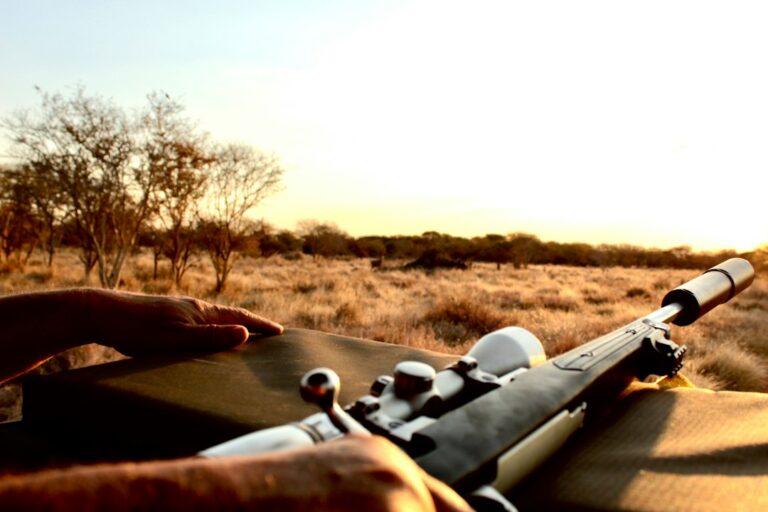
Foundations of a .300 Win Mag Precision Rifle
We embark on a journey to assemble a precision rifle setup chambered in .300 Winchester Magnum, a cartridge renowned for its long-range capabilities and heavy-bullet potential. Our focus here isn’t just on acquisition, but on strategic allocation of resources to achieve a truly capable system without breaking the bank entirely. The .300 Win Mag, while powerful and effective at extended distances, does present certain financial considerations, particularly concerning ammunition costs and recoil management, which we must factor into our overall budget. We understand that a truly “budget” build for a cartridge of this nature requires careful choices, but we also acknowledge that cutting too many corners can compromise the very precision we seek. Therefore, our approach will be pragmatic, aiming for value and performance over absolute lowest price.
We recognize that the journey to precision shooting involves more than just the rifle itself. It’s a holistic endeavor encompassing the rifle, the optic, the supporting accessories, and critically, the continuous supply of ammunition and the dedicated practice required to master the system. For us, this means thinking beyond the initial purchase price and considering the ongoing operational expenses. While the .300 Win Mag is a formidable long-range cartridge, its inherent characteristics, such as significant recoil and the expense of its ammunition, mean we need to be particularly diligent in our financial planning compared to smaller, less powerful calibers. Our ultimate goal is to field a precision rifle that is not only accurate but also sustainable within a carefully managed budget, allowing us to fully engage in the pursuit of long-range excellence.
For those interested in budgeting for a .300 Win Mag precision rifle setup, a great resource is the article found at 300wm.com. This article provides valuable insights into the costs associated with various components, including the rifle itself, optics, and accessories, ensuring that enthusiasts can make informed decisions while planning their purchases. By understanding the financial aspects of building a precision rifle, shooters can better allocate their resources and achieve their desired setup without overspending.
Allocating Resources: The Rifle and Optic
This section forms the core of our initial investment, dictating the fundamental performance of our precision setup. We’ve learned that simply buying the most expensive component doesn’t guarantee success, nor does skimping on critical items. The synergy between the rifle and the optic is paramount, and budgeting rules have evolved to reflect this.
The Rifle Platform: Choosing Wisely
When it comes to the rifle itself, we’re looking for a solid foundation that offers good out-of-the-box accuracy, reliability, and the potential for future upgrades if our budget allows later on. While custom actions and high-end chassis systems are tempting, they often fall outside a practical budget for a .300 Win Mag precision setup. We’ve seen examples like the Savage 110 Precision consistently praised for offering excellent value and performance. These rifles often come with features beneficial for precision shooting, such as adjustable triggers, heavy barrels, and robust stocks, making them an excellent starting point.
Our aim is to acquire a rifle that provides a stable, accurate platform for the .300 Win Mag cartridge. We’re prioritizing features that directly impact accuracy, such as a stiff action, a free-floated barrel, and a consistent trigger pull. While a more basic stock might be acceptable initially, we’d ideally prefer one that offers some adjustability for length of pull and comb height to ensure proper cheek weld and eye relief with our chosen optic. The Savage 110 Precision, for instance, is often lauded as a competition-ready package when paired with a quality scope, coming in at a total setup cost around $2,000 for the rifle and optic. This gives us a solid benchmark for our rifle portion of the budget. We anticipate spending somewhere in the range of $500 to $800 on the rifle itself, allowing us to allocate a larger portion of our budget to the optic, as current budgeting wisdom strongly suggests.
The Optic: Our Primary Investment
Here is where modern budgeting guidance really emphasizes a shift in priorities. The common budgeting rule in 2026 suggests we should spend more on the optic than the rifle. One source specifically suggests that for a $2,000 setup, a split of approximately $1,500 on the scope and $500 on the rifle is preferable. This isn’t to say a cheap rifle is always the answer, but rather that a high-quality optic can truly unlock the precision potential of a decent rifle, especially with a demanding cartridge like the .300 Win Mag where precise holdovers and wind calls are critical.
For long-range precision, we need an optic with certain key features. Target knobs (exposed, resettable turrets) are essential for making precise adjustments for elevation and windage. A magnification range that includes at least 10x, and preferably higher for the distances we anticipate shooting with a .300 Win Mag, is crucial for seeing our targets and making accurate calls. Reticle choice is also important; we’ll lean towards a mil-dot or MRAD Christmas tree style reticle that allows for precise holdovers and wind corrections without constantly adjusting turrets once we’ve established a base zero.
While new high-end optics can easily exceed $2,000, we’re mindful of our overall budget. We’ve found that for budget builds, used optics in the $300-$500 range are still commonly recommended. This segment of the used market can yield excellent value, often offering features like target knobs and 10x+ magnification that were once premium. Careful searching on reputable forums and marketplaces for brands known for durability and optical clarity can lead to significant savings. We will diligently research brands and models known for holding their zero, tracking accurately, and offering clear glass within this price bracket. Our goal is to secure an optic that provides repeatable adjustments and a clear sight picture, even if it means foregoing some of the latest bells and whistles found on top-tier models. The optic is our window to precision, and we will not compromise its essential functionality.
Essential Supporting Gear
Beyond the rifle and optic, a precision setup requires a suite of supporting accessories to function effectively and consistently. Neglecting these items can undermine the performance of even the most expensive rifle and scope combination. We’ve categorized these into critical and highly recommended items to ensure our budget covers the absolute necessities.
Mounting the Optic: Rings and Bases
A quality mount is non-negotiable. Even the best optic will fail to perform if it’s not securely and properly attached to the rifle. We need a robust base, preferably a 20 MOA canted base, to provide additional elevation adjustment for long-range shots with the .300 Win Mag. This cant helps prevent us from running out of vertical adjustment in the scope itself at extended distances. The rings must be strong, precisely machined, and capable of withstanding the significant recoil of the .300 Win Mag without shifting.
While budget-friendly options exist, we will avoid anything that feels flimsy or has a questionable reputation. Brands like Warne, Leupold, and Weaver often offer solid options that balance cost with quality. We anticipate spending in the range of $100-$200 for a reliable set of rings and a durable scope base. This is a small investment that protects a much larger one (the optic) and ensures consistent performance. Skimping here is a false economy that can lead to frustration and missed shots.
Stability and Support: Bipod and Support Bag
Precision shooting demands stability, and for us, this means investing in a quality bipod and a versatile rear support bag. A good bipod provides a stable front rest, allowing us to consistently hold our rifle on target. We’ll look for a bipod that is robust, easy to deploy, and offers adjustable leg height with independent leg movement to adapt to uneven terrain. Brands like Harris Bipods have long been a go-to for their reliability and value. While there are more expensive options with advanced features, a solid, basic Harris-style bipod will serve our needs well. We’re looking at a budget of approximately $75-$150 for a functional and durable bipod.
A rear support bag is equally critical for achieving a stable shooting position. Whether we’re shooting prone, from a bench, or off a barricade, a good support bag allows us to fine-tune our elevation and eliminate wobble. There are many options, from simple sandbags to more advanced fill materials. We’ll prioritize one that is durable, offers a good grip, and is easily manipulable to provide precise adjustments. Often, a simple, durable bag filled with synthetic media offers excellent performance without excessive cost. We’ll budget around $20-$50 for a reliable rear support bag. These two items, working in tandem, will significantly enhance our ability to shoot accurately.
Magazines and Essential Tools
For any bolt-action rifle, having at least one or two spare magazines is prudent, especially if we intend to participate in competitions. Swapping magazines can be quicker than single-loading, and having spares reduces the risk of being sidelined by a malfunction or lost magazine. The cost of magazines can vary significantly by rifle model, but we anticipate budgeting $50-$100 per spare magazine.
Beyond magazines, a basic set of tools for maintenance and adjustment is necessary. This includes a torque wrench for scope rings and base screws (to ensure proper torque without overtightening), a cleaning kit specifically for .300 Win Mag, and any specific tools required for disassembling our chosen rifle. While we don’t need a full armory of gunsmithing tools, having the essentials for field adjustments and regular cleaning is non-negotiable. We’ll set aside around $50-$100 for these essential tools and cleaning supplies.
The Ongoing Cost of Ammunition
This is perhaps the most significant long-term financial consideration for our .300 Win Mag precision rifle setup. The .300 Win Mag, while powerful, is not a budget-friendly cartridge when it comes to ammunition. We must account for this reality in our overall financial planning, as consistent practice is vital for precision shooting.
Factory Match Ammunition Costs
We’ve observed that factory match loads for .300 Win Mag are indeed expensive. Typical factory pricing, according to various guides, ranges from $4 to $7 per round. This translates to approximately $60 to $68 per 20-round box for premium loads. If we plan to shoot even 50 rounds in a single practice session, we’re looking at a cost of $200 to $350 just for that one outing. This significantly impacts our long-term budget and underscores the importance of every shot.
Given these costs, we understand that simply buying hundreds of rounds of premium factory match ammunition for casual plinking isn’t sustainable for most budgets. Our approach will be strategic: we’ll purchase a limited quantity of high-quality factory match ammunition to establish a baseline, confirm our rifle’s inherent accuracy, and validate our ballistic data. This initial batch will be crucial for developing our load data and getting comfortable with the rifle’s recoil and handling characteristics. We anticipate needing at least 100-200 rounds of this premium ammunition for initial setup and zeroing.
Reloading as a Cost-Saving Strategy
For us, serious precision shooting with a .300 Win Mag necessitates reloading. The cost savings are simply too significant to ignore over the long term. While the initial investment in reloading equipment can seem daunting, it quickly pays for itself, especially with a cartridge as expensive as the .300 Win Mag. A basic single-stage reloading press, dies, powder scale, powder measure, primer tool, and case preparation tools can typically be acquired for $300-$600.
Once we have our reloading setup, the cost per round drops dramatically. We can purchase components like brass, primers, powder, and precision bullets at a fraction of the cost of factory match ammunition. This allows us to practice more frequently and experiment with different loads to find the optimal combination for our specific rifle, which is a crucial aspect of maximizing precision. Moreover, reloading gives us precise control over the consistency of our ammunition, which is paramount for long-range accuracy. We can tailor bullet seating depth, powder charge, and other variables to achieve the tightest groups possible. While the initial outlay for equipment is an extra budget consideration, it’s an investment that yields substantial returns in both cost savings and performance enhancement. We view reloading not just as a way to save money, but as an integral part of the precision shooting discipline for a cartridge like the .300 Win Mag.
When considering the costs associated with building a precision rifle setup, it’s essential to explore various aspects of budgeting effectively. A related article that delves deeper into the financial planning for firearms enthusiasts can be found here. This resource provides valuable insights into how to allocate funds for essential components, ensuring that you make informed decisions while assembling your .300 Win Mag precision rifle.
Beyond the Hardware: Sustaining Our Passion
| Component | Estimated Cost | Notes |
|---|---|---|
| Rifle (Action & Barrel) | 1200 – 1800 | High-quality precision rifle action and match-grade barrel |
| Stock | 300 – 700 | Precision chassis or fiberglass stock for stability |
| Optics (Scope) | 800 – 2000 | High-magnification scope with reliable adjustments |
| Mounts & Rings | 150 – 300 | Quality scope mounts and rings for zero retention |
| Trigger | 200 – 400 | Adjustable precision trigger for consistent pull |
| Bipod/Support | 100 – 300 | Stable bipod or shooting rest |
| Ammunition | 1.50 – 3.00 per round | Match-grade factory or handloaded rounds |
| Reloading Equipment | 400 – 1000 | Press, dies, scales, and other tools for handloading |
| Accessories (Cleaning, Cases, etc.) | 150 – 400 | Cleaning kits, rifle cases, and other essentials |
| Total Estimated Budget | ~3300 – 7200+ | Depending on brand choices and customization |
Our budget needs to extend beyond the initial purchase of hardware and even the ongoing cost of ammunition. There are other expenditures that, while not directly part of the rifle setup, are essential for engaging in precision shooting activities, maintaining our equipment, and continually improving our skills. These include match fees, travel expenses, and eventually, the cost of replacing our barrel.
Match Fees and Travel
If our goal is to engage in precision rifle competitions, match fees and travel become an unavoidable part of the budget. Local club matches might have fees ranging from $25-$75, while larger regional or national competitions can easily be $100-$200 or more per event. These fees cover range rental, targets, prizes, and administrative costs. While these might seem like discretionary expenses, for us, they represent opportunities to test our skills, validate our equipment, and learn from experienced shooters.
Furthermore, getting to these matches often involves travel. Fuel costs, potential overnight stays, and food expenses can quickly add up, especially if events are held at a distance. We’ll need to realistically assess how many matches we intend to participate in per year and factor these associated costs into our annual budget. Even if we don’t compete, regular trips to a long-range facility for practice will incur similar travel costs. This means allocating a specific portion of our budget, perhaps $200-$500 annually, depending on our level of participation, for these experience-enhancing expenditures.
Maintenance Supplies and Training Aids
Keeping our precision rifle in top condition requires ongoing maintenance. This includes not only the basic cleaning supplies we initially purchased but also bore cleaners, specialized solvents, brushes, patches, and lubricants. Over time, components like cleaning rods, jags, and bore guides may need replacement or upgrades. We’ll allocate a small but consistent portion of our budget, perhaps $50-$100 per year, for these essential maintenance items. Neglecting proper cleaning and lubrication can lead to decreased accuracy and premature wear.
Beyond physical maintenance, we also need to consider training aids. This might include a good ballistic calculator (many are free, but some advanced ones have a cost), wind meters, spotting scopes (especially if shooting with a partner), or even dedicated rangefinders. While not all are immediately essential, they contribute significantly to our ability to make accurate shots. We will prioritize these based on their impact on our shooting performance and integrate them into our budget as funds become available or as needs arise.
Eventual Barrel Replacement
A critical, albeit less immediate, long-term cost for a .300 Win Mag precision rifle is barrel replacement. High-pressure, high-velocity cartridges like the .300 Win Mag have a finite barrel life, especially when used for precision shooting where maintaining consistent velocity and accuracy is paramount. While it’s difficult to predict an exact round count, precision barrels in .300 Win Mag might typically last anywhere from 1,500 to 2,500 rounds before accuracy degrades significantly enough to warrant replacement.
Given the expense of .300 Win Mag ammunition, it might take us a few years to reach this point. However, when we do, replacing a barrel (including the cost of the new barrel blank and gunsmithing fees for installation and chambering) can easily run $500-$1,000 or more. This is a significant future expense that we need to acknowledge and ideally begin saving for well in advance. We won’t need to budget for this immediately, but it’s a known cost that will eventually materialize, reinforcing the need for long-term financial planning if we intend to seriously pursue precision shooting with this cartridge.
FAQs
What is the average cost of a .300 Win Mag precision rifle?
The average cost of a .300 Win Mag precision rifle can range from $1,000 to $3,000, depending on the brand, features, and customization options. High-end models can exceed this range, especially those designed for competitive shooting or long-range hunting.
What additional equipment should I budget for when setting up a .300 Win Mag rifle?
In addition to the rifle itself, you should budget for a quality scope, bipod, ammunition, and a rifle case. Other accessories may include a cleaning kit, shooting rest, and a rangefinder, which can add several hundred to over a thousand dollars to your total setup cost.
How much does ammunition for a .300 Win Mag typically cost?
Ammunition for a .300 Win Mag typically costs between $1.50 to $3.00 per round, depending on the brand and type of bullet. For practice and sighting in, you may want to purchase bulk ammunition, while premium rounds for hunting or precision shooting can be more expensive.
Are there any ongoing costs associated with maintaining a .300 Win Mag precision rifle?
Yes, ongoing costs include purchasing ammunition for practice and hunting, regular cleaning supplies, and potential replacement parts or upgrades. Additionally, if you plan to have your rifle professionally serviced or tuned, that will also incur costs over time.
What factors should I consider when budgeting for a .300 Win Mag setup?
When budgeting for a .300 Win Mag setup, consider the quality of the rifle and scope, the type of shooting you plan to do (hunting vs. competition), and the cost of accessories and ammunition. It’s also wise to factor in potential future upgrades and maintenance costs to ensure a comprehensive budget.