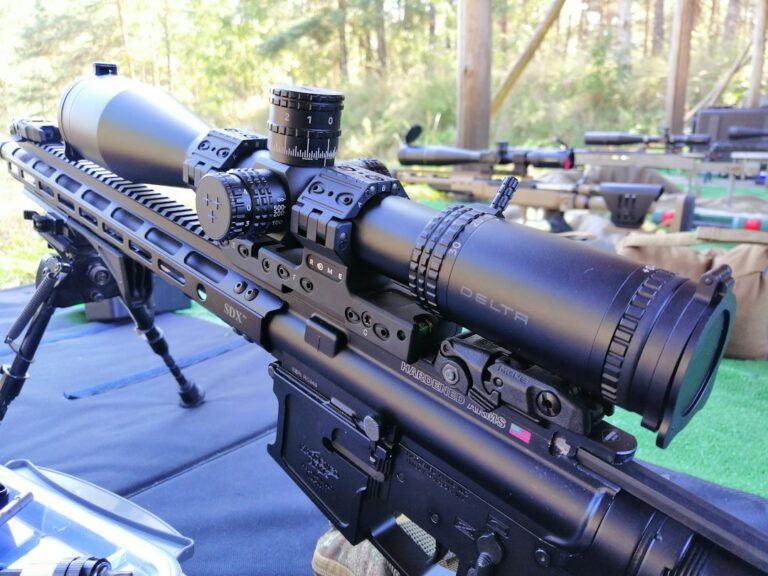
Understanding the .300 Win Mag for Extended Precision
When we delve into the realm of long-range precision shooting, the .300 Winchester Magnum invariably enters the conversation. For decades, it has served as a formidable cartridge, bridging the gap between standard magnum hunting rounds and specialized extreme-long-range calibers. Its versatility allows it to excel in both hunting scenarios where ethical long-range shots are required, and in competitive target shooting where every minute of angle matters. As enthusiasts, we are constantly seeking the optimal combination of rifle, optics, and crucially, ammunition, to squeeze every ounce of performance from this magnificent cartridge. Our focus here is on understanding what makes factory .300 Win Mag ammunition suitable for long-range precision, particularly emphasizing the characteristics that contribute to consistent performance at extended distances, often exceeding 1,000 yards. We’ll explore specific factory loads that stand out in the current market, drawing upon the latest innovations and considerations that dictate success in this demanding discipline.
When considering Factory .300 Win Mag Ammunition for long-range precision shooting, it’s essential to understand the various factors that can influence performance, such as bullet type, velocity, and consistency. For a deeper dive into the specifics of selecting the right ammunition for your needs, you may find the article on 300wm.com particularly informative. This resource provides valuable insights into the characteristics of different .300 Win Mag loads, helping you make an informed decision for your long-range shooting endeavors.
Key Ammunition Characteristics for Long-Range Performance
Achieving long-range precision with any cartridge, and especially with the .300 Win Mag, hinges significantly on the ammunition’s fundamental design and manufacturing consistency. We’ve observed that several characteristics are paramount for ensuring repeatable accuracy and predictable external ballistics, which are essential when shots extend far beyond conventional distances. Without these foundational elements, even the most skilled shooter and finely tuned rifle will struggle to maintain consistent impacts on target.
Bullet Design and Ballistic Coefficient
The bullet itself is arguably the most critical component for long-range performance. For the .300 Win Mag, we’ve learned that heavy-for-caliber bullets with high ballistic coefficients (BCs) are indispensable. This preference is strongly influenced by military and precision shooting contexts, where loads like the U.S. military’s Mk 248 Mod 1 moved from 190-grain to 220-grain MatchKing bullets to significantly extend effective range. This shift underscores a fundamental principle: heavier bullets retain more energy, resist wind drift better, and maintain higher velocities further downrange.
Modern long-range bullets feature sophisticated designs. We look for those with a long ogive, a sharp, heat-resistant tip, and a well-designed boat-tail. These elements collectively minimize drag and improve the bullet’s stability in flight. For instance, the new BC Max bullet used in Winchester Supreme Long Range ammunition is purpose-built with a thick-walled jacket, long boat-tail, and heat-resistant tip specifically for high BC and stability. Similarly, Berger Hybrid boat-tail bullets, found in Federal Gold Medal factory loads, are renowned for their very high BCs, designed to yield “flattest trajectories, less wind drift and surgical long-range accuracy.” Furthermore, verified ballistic coefficients, like those Doppler-verified for the Nosler AccuBond Long Range bullets used in Federal Custom Shop offerings, are invaluable. They enhance the accuracy of ballistic calculators, providing shooters with more precise predictions for extreme distance engagements.
Consistent Components and Manufacturing Quality
Beyond bullet design, the consistency of all ammunition components and the quality of the manufacturing process are absolutely vital. We cannot overstate the importance of match-grade primers, premium brass, and carefully selected propellants. Variations in primer ignition, brass consistency (neck tension, case volume), or powder charge can lead to significant shot-to-shot velocity differences and inconsistent pressures, which directly translate to vertical stringing and wider groups at long range.
Match-grade primers, such as those used in Federal Gold Medal match ammunition and Winchester Supreme Long Range, provide a uniform ignition source, ensuring consistent propellant burn. Premium brass contributes to repeatable neck tension and case life, which is critical for consistent bullet seating and reliable feeding. The careful selection and precise metering of propellants are equally important, as slight variations in powder charge can alter muzzle velocity, causing significant trajectory deviations at distances beyond 500 yards. When we evaluate factory ammunition for long-range precision, we essentially look for loads that demonstrate these elements of consistency and quality control, held to strict accuracy specifications by the manufacturer.
Exemplary Factory .300 Win Mag Offerings
The market for .300 Win Mag ammunition is robust, offering a wide array of options for various applications. However, for long-range precision, certain factory loads stand out due to their specialized designs and proven performance characteristics. We’ve identified a few key examples that embody the qualities we prioritize for extended-range shooting, whether for hunting or competitive target work.
Winchester Supreme Long Range – BC Max
The Winchester Supreme Long Range line, featuring the new BC Max bullet, represents a compelling option for those seeking extended-range capability from a hunting-oriented load without sacrificing precision. We recognize its design as specifically tailored for the demands of long-range shooting. The 195-grain BC Max bullet, launching at approximately 2,900 fps, is designed for a flat trajectory and robust terminal performance at long distances. Its thick-walled jacket, long boat-tail, and heat-resistant tip contribute to a high ballistic coefficient and excellent in-flight stability, directly addressing critical needs for precision at range. Furthermore, the use of match-grade primers in this load underscores Winchester’s commitment to shot-to-shot consistency, making it a notable current factory option that bridges the gap between hunting ethics and precision requirements. This blend of features positions it as a strong contender for those who require both accuracy and reliable expansion for long-range game retrieval.
Federal Custom Shop .300 Win Mag – Nosler AccuBond Long Range
For discerning shooters who demand the utmost in verified performance, Federal’s Custom Shop offerings built around the Nosler AccuBond Long Range (NLR) bullet are particularly noteworthy. What sets this ammunition apart, in our view, is the emphasis on Doppler-verified ballistic coefficients. This isn’t merely a theoretical value; it’s a precisely measured BC that significantly improves the accuracy of ballistic calculators at extreme distances. When we are pushing shots beyond 800 or 1,000 yards, even minor inaccuracies in BC data can lead to significant misses. The AccuBond Long Range bullet itself is a bonded, long-range design, offering both high BC and reliable terminal performance on game. We see this as an excellent example of what to look for in precision hunting ammunition: verified BCs, a well-engineered long-range bullet design, and tailored loading that goes beyond generic soft points to provide specialized long-range capability. The Custom Shop approach implies meticulous attention to detail and quality control, which are hallmarks of true precision ammunition.
Federal Gold Medal .300 Win Mag – Berger Hybrid
When our objective is pure match-style precision for target work, the Federal Gold Medal .300 Win Mag loaded with Berger Hybrid boat-tail bullets is a benchmark. We consider this a flagship factory match ammunition for long-range precision. Berger Hybrid bullets are renowned in the competitive shooting world for their exceptionally high ballistic coefficients and their forgiving nature, often stabilizing well across a range of twist rates. Federal’s Gold Medal standard ensures that these superb bullets are paired with Gold Medal match primers, premium brass, and carefully selected propellant, all held to Federal’s stringent accuracy specifications. The synergy of these components results in ammunition designed to deliver “flattest trajectories, less wind drift and surgical long-range accuracy.” For competitive shooters or those who prioritize absolute group size at extreme distances, this load provides a consistent and highly capable foundation right out of the box, often rivaling handloads in terms of precision.
General Considerations for Long-Range .300 Win Mag Use
Beyond specific factory loads, we find that a broader understanding of general principles and historical developments in the long-range use of the .300 Win Mag can significantly inform our ammunition choices. The cartridge’s enduring popularity and its adoption in various demanding roles have led to valuable insights that apply across the board.
The Role of Heavy-for-Caliber Bullets
The historical trajectory of the .300 Win Mag in long-range contexts, particularly as observed in military applications, provides clear evidence for the effectiveness of heavy-for-caliber bullets. The evolution from 190-grain to 220-grain MatchKing bullets in military loads like the Mk 248 Mod 1 was a deliberate move to extend effective range and improve performance at distance. This change was not arbitrary; it was driven by the undeniable physics that dictate how bullets interact with air resistance and wind. We emphasize that for precision past 1,000 yards, prioritizing bullets in the 190-grain to 220-grain range with high ballistic coefficients is paramount. These heavier projectiles carry more momentum, shed velocity at a slower rate, and are less susceptible to environmental factors like crosswinds, which become increasingly critical as distance increases. This preference for heavy bullets is a recurring theme in all articles and analyses discussing the .300 Win Mag’s capability at extreme ranges.
Prioritizing Match and Long-Range Hunting Bullet Designs
When making our selection, we consciously gravitate towards factory ammunition utilizing either dedicated match bullets or purpose-built long-range hunting bullets. Generic soft-point hunting bullets, while effective at closer ranges, typically do not possess the aerodynamic profiles, high BCs, or construction consistency required for reliable precision at extended distances. We look for bullet designs like the Berger Hybrid, Nosler AccuBond Long Range, Hornady ELD Match/ELD-X, or similar technologically advanced projectiles. These bullets are engineered with specific features—such as secant or tangent ogives, boat-tails, and precise manufacturing tolerances—to minimize drag and maximize stability. For hunting, the key is to ensure that the “long-range hunting bullet” design not only offers high BC but also reliable expansion and penetration at the lower impact velocities encountered at extreme ranges, ensuring an ethical kill. The balance between precision and terminal performance is crucial for long-range hunting.
Leveraging Consistent Components and Data
Finally, a critical consideration for us is the assurance of consistent components and the availability of accurate, published ballistic data. As discussed previously, match primers and quality brass are non-negotiable for shot-to-shot consistency. We also value manufacturers who provide detailed and accurate data for their factory loads, including published muzzle velocities and ballistic coefficients. This information is indispensable for populating ballistic calculators, which are essential tools for predicting bullet drop and wind drift at long range. Without reliable data, even the most sophisticated ballistic software cannot provide accurate solutions, leading to frustrating misses. Shooters serious about long-range precision with the .300 Win Mag must prioritize factory loads that offer this level of transparency and component quality, as it forms the bedrock of predictable and repeatable long-range performance.
When considering Factory .300 Win Mag Ammunition for long-range precision shooting, it’s essential to understand the various factors that can influence your choice. A related article that delves deeper into the nuances of selecting the right ammunition for optimal performance is available for those looking to enhance their knowledge. You can find valuable insights in this comprehensive guide, which discusses key aspects such as bullet types, velocity, and ballistic coefficients that can significantly impact your shooting experience.
Market Availability and Practical Considerations
| Metric | Description | Typical Values / Considerations |
|---|---|---|
| Bullet Weight | Mass of the bullet, usually measured in grains (gr) | 150 gr to 220 gr; heavier bullets preferred for long-range stability |
| Bullet Type | Design and construction of the bullet | Match Grade, Boat Tail Hollow Point (BTHP), Polymer Tip for aerodynamic efficiency |
| Muzzle Velocity | Speed of the bullet as it leaves the barrel, measured in feet per second (fps) | 2600 fps to 3200 fps; higher velocity improves flat trajectory |
| Ballistic Coefficient (BC) | Measure of bullet’s ability to overcome air resistance | 0.4 to 0.7; higher BC preferred for long-range precision |
| Consistency (Standard Deviation) | Variation in muzzle velocity between shots | Low standard deviation (under 15 fps) indicates better precision |
| Primer Type | Type of primer used in the cartridge | Match Grade primers preferred for consistent ignition |
| Case Quality | Material and uniformity of the cartridge case | Brass cases with uniform wall thickness for reliability and accuracy |
| Powder Type | Type of propellant used | Slow-burning powders optimized for .300 Win Mag for consistent velocity |
| Accuracy Rating | Manufacturer’s or independent test group accuracy claims | Sub-MOA (Minute of Angle) preferred for long-range precision |
As we navigate the options for .300 Win Mag factory ammunition, understanding market availability and practical considerations like cost is crucial, especially for those planning frequent training and competition. The landscape of available factory loads is dynamic, but certain patterns remain consistent, influencing our choices.
Broad Availability of .300 Win Mag SKUs
Our surveys of current .300 Win Mag offerings consistently reveal broad availability of both hunting and range/match loads from major manufacturers. Companies like Federal, Remington, and Hornady, among others, typically feature dozens of distinct SKUs on their product pages. This wide selection is a significant advantage for .300 Win Mag shooters, providing ample choice to match specific rifle preferences, intended uses (hunting vs. target), and budget constraints. This robust market means we are rarely left without viable options for precision shooting, ensuring a steady supply of ammunition even as specific lines or bullet types may fluctuate in production. This broad availability allows us to experiment with different loads to find what our individual rifles prefer, which is a critical step in optimizing long-range precision. The sheer volume of offerings confirms the .300 Win Mag’s continued prominence in both the hunting and precision shooting communities.
.300 Win Mag vs. Larger Magnums: Cost and Accessibility
When comparing the .300 Win Mag to larger magnum cartridges often used for extreme long range, such as the .338 Lapua Magnum, we consistently note two significant advantages for the .300 Win Mag: wider factory ammunition availability and a lower cost per round. This distinction is particularly important if we plan to train frequently with factory precision loads. The higher cost and sometimes more limited availability of specialized cartridges like the .338 Lapua can be a barrier to consistent practice, which is vital for developing and maintaining long-range shooting skills.
The lower cost per round of .300 Win Mag ammunition allows for greater volume of fire, translating directly to more trigger time, more data collection, and ultimately, improved proficiency. This economic advantage enables us to shoot more often without breaking the bank, refining our techniques, understanding our rifle’s nuances, and testing our ballistic solutions under various conditions. For those stepping into long-range precision or seeking a capable, yet more accessible, magnum cartridge for regular use, the .300 Win Mag stands out as an excellent choice that balances power, precision, and practical considerations. The fact that top-tier precision loads are readily available and comparatively more affordable makes it an ideal platform for extensive training and competition.
FAQs
What is .300 Win Mag ammunition commonly used for?
.300 Win Mag ammunition is primarily used for long-range shooting and hunting large game. Its high velocity and flat trajectory make it suitable for precision shooting at extended distances, making it a popular choice among competitive shooters and hunters alike.
What should I look for in factory .300 Win Mag ammunition for precision shooting?
When selecting factory .300 Win Mag ammunition for precision shooting, consider factors such as bullet type (e.g., match-grade or hunting bullets), bullet weight, muzzle velocity, and consistency in performance. Additionally, look for ammunition that has been tested for accuracy and reliability in your specific firearm.
How does bullet weight affect .300 Win Mag performance?
Bullet weight significantly impacts the performance of .300 Win Mag ammunition. Heavier bullets (e.g., 180-220 grains) tend to provide better energy retention and are more effective for larger game, while lighter bullets (e.g., 150-165 grains) can offer flatter trajectories and higher velocities, making them suitable for long-range precision shooting.
Are there specific brands known for high-quality .300 Win Mag ammunition?
Yes, several brands are recognized for producing high-quality .300 Win Mag ammunition, including Federal Premium, Hornady, Nosler, and Winchester. These manufacturers often offer a variety of loads tailored for precision shooting and hunting, ensuring reliability and accuracy.
What is the typical price range for factory .300 Win Mag ammunition?
The price of factory .300 Win Mag ammunition can vary widely based on the brand, bullet type, and quantity purchased. Generally, you can expect to pay between $30 to $70 per box of 20 rounds, with match-grade ammunition typically costing more due to its enhanced performance characteristics.