Understanding the .300 Winchester Magnum and Its Precision Demands
We’ve all been there: the thrill of a .300 Winchester Magnum, that potent cartridge revered for its flat trajectory and devastating terminal performance, quickly turns to frustration when groups start opening up. What began as a tight cluster of holes on paper transforms into a scattered pattern, leaving us scratching our heads and questioning our technique, our rifle, or even our sanity. The .300 Win Mag is a magnificent cartridge, but it’s also one that demands meticulous attention to detail. Its inherent power and the velocities it achieves amplify even the slightest inconsistencies, turning minor issues into significant accuracy problems. We often hear stories of hunters and long-range shooters experiencing superb accuracy one day, only to find their groups inexplicably falling apart the next. This phenomenon is precisely what we aim to address today. Our collective experience has shown us that pinpointing the root cause of inconsistent groups in a .300 Win Mag often requires a systematic, almost diagnostic approach. It’s not about making a single magical adjustment; it’s about eliminating variables one by one until the culprit reveals itself. This isn’t merely about achieving “acceptable” accuracy; it’s about unlocking the true potential of this formidable cartridge and ensuring that every shot counts, whether on the range or in the field. We understand the investment of time, effort, and resources that goes into shooting a .300 Win Mag, and we believe that with the right troubleshooting methodology, we can restore confidence in our rifles and our shooting.
The Nature of Inconsistency in High-Powered Rifles
The .300 Win Mag, by its very nature, pushes projectiles to high velocities and energies. This characteristic, while beneficial for performance, also means that the rifle is more sensitive to subtle variations than, say, a milder .223 Remington. A minute vibration, an almost imperceptible change in barrel harmonics, or a slight shift in bullet stability can be magnified significantly downrange. We’ve observed that issues that might present as a quarter-inch group opener in a less powerful cartridge could easily translate to a full inch or more in a .300 Win Mag. This sensitivity is a double-edged sword: it allows for incredible precision when everything is harmonized, but it also makes diagnosing issues more challenging. The recoil impulse itself can stress components, potentially loosening screws or shifting optics over time. Furthermore, the sheer volume of powder burned and the pressures generated contribute to more rapid fouling and barrel wear, which can introduce new variables into the accuracy equation if not properly managed. We must accept that maintaining peak accuracy with a .300 Win Mag is an ongoing process, not a one-time fix.
For those looking to delve deeper into the intricacies of achieving consistent accuracy with a .300 Win Mag rifle, a related article that offers valuable insights is available at 300wm.com. This resource provides expert tips and techniques for troubleshooting common issues that can lead to inconsistent groupings, helping shooters enhance their performance on the range or in the field. Whether you’re a seasoned marksman or a novice, the information presented can be instrumental in refining your shooting skills and understanding the nuances of this powerful cartridge.
Starting with the Ammunition: The First Suspect
When groups start to scatter, our first instinct might be to blame ourselves or our rifle’s expensive components. However, our collective experience, and numerous reports from fellow shooters, consistently points to ammunition as the primary and most frequently overlooked suspect. It’s often the simplest fix and the easiest variable to control. We’ve seen countless instances where switching between seemingly identical boxes of ammunition, even from the same manufacturer and with the same bullet weight, leads to a noticeable shift in point of impact and a significant opening of groups. This isn’t just anecdotal; it’s a recurring observation supported by extensive testing.
Understanding Lot Numbers and Manufacturing Variations
Every box of factory ammunition, especially premium match-grade loads, comes with a lot number. This number is crucial. It signifies a specific production run, often using components sourced from the same batches and produced under identical conditions. Even slight variations in primer brisance, powder consistency, bullet jacket thickness, or lead core hardness between different manufacturing runs can lead to subtle differences in internal ballistic behavior. For a cartridge as sensitive as the .300 Win Mag, these subtle differences are amplified. We might purchase two boxes of “180-grain Federal Premium Match” ammunition, but if they have different lot numbers, they could perform differently in our rifle. One lot might be perfectly tuned to our barrel’s harmonics, while another, despite being from the same brand, might cause flyer after flyer. This is why, when we discover a load our rifle likes, we always try to buy as much of that specific lot number as possible. It helps us maintain consistency for extended periods.
Testing Different Ammunition Types and Handloads
Beyond lot numbers, we also must consider the fundamental differences between various ammunition types. Are we shooting hunting loads designed for terminal performance or match-grade ammunition optimized for accuracy? The bullet construction, powder type, and even the case metallurgy can vary significantly. If we’re troubleshooting an accuracy problem, our first step should be to acquire several different brands and bullet weights of factory ammunition, ensuring we use fresh boxes with consistent lot numbers for each test. This allows us to establish a baseline and see if our rifle simply prefers a different projectile or charge.
For those of us who reload, the ammunition variable becomes even more complex, but also more controllable. Handloading allows us to precisely tune components to our specific rifle, often achieving levels of accuracy unattainable with factory ammunition. When encountering inconsistent groups with handloads, we systematically vary one component at a time:
- Primers: Different brands and types (e.g., standard vs. magnum, large rifle vs. large rifle magnum) have different brisance and flame characteristics, affecting ignition consistency. A subtle change here can tighten groups.
- Powder Charges: Even 0.5-grain increments can significantly alter barrel harmonics and pressure curves. We meticulously work up and down established nodes, looking for the sweet spot where velocity extreme spread is minimized and groups tighten.
- Seating Depth: This is a critical factor for the .300 Win Mag. Changing the bullet’s jump to the lands (or engagement with them) can dramatically influence pressure, bullet stability, and how the bullet enters the rifling. We often experiment with 0.005-inch increments in seating depth to find what our rifle prefers.
- Bullet Type: Beyond weight, the construction, bearing surface, and ogive shape of different bullets can interact uniquely with our rifle’s bore. Switching from a boat-tail spitzer to a VLD (Very Low Drag) design, for example, can yield surprising results.
Many reloaders have reported significant improvements in .300 Win Mag accuracy by carefully tuning these components, highlighting the cartridge’s sensitivity to load specifics. It truly is an exercise in precision.
Scrutinizing the Optic and Mounts: The Critical Link
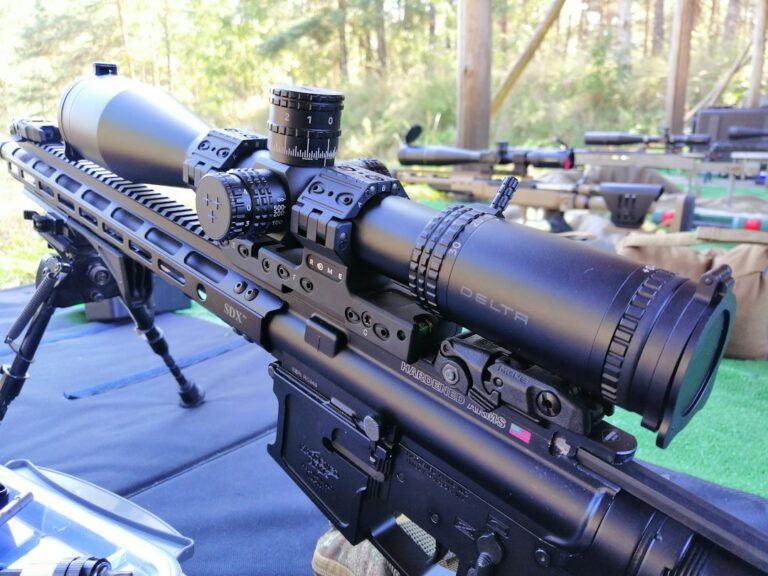
Once we’ve eliminated ammunition as the primary suspect, our attention invariably shifts to the rifle’s optics. The scope, its rings, and the base that attaches it to the receiver form a critical link between our eye and the target. Any compromise in this system, no matter how minor, will directly translate to inconsistent groups downrange. We’ve seen firsthand how a perfectly good rifle can suddenly shoot erratically simply because a component in its optical system has loosened or shifted. Loose or improperly torqued scope bases and rings are recurring culprits, often manifesting as unpredictable flyers or shifts in point of impact that defy explanation.
Checking Scope Bases and Rings for Stability
Our troubleshooting process always begins with a thorough inspection of the scope’s physical attachment to the rifle. We check every screw:
- Base Screws: These attach the scope base to the rifle’s receiver. We ensure they are torqued to the manufacturer’s specifications. It’s not uncommon for these to loosen slightly over time due to the recoil of the .300 Win Mag. We often apply a small amount of non-permanent thread locker (like blue Loctite) to these screws to prevent future movement, ensuring the receiver threads are clean and oil-free first.
- Ring Screws: These secure the scope tube within the rings. Again, proper torque is paramount. Uneven torque can pinch the scope tube, stressing internal components, or allow the scope to shift under recoil. We use a torque wrench to ensure even and correct tension on all screws, cross-tightening them incrementally. We also visually inspect the rings for any signs of damage, burrs, or uneven contact with the scope tube. Sometimes, lapping the rings is necessary to ensure perfect alignment and contact, especially with high-end scopes where optical clarity is paramount.
We also physically try to wiggle the scope, checking for any perceptible movement within the rings or the rings on the base. Even a microscopic amount of play here will lead to significant group dispersion at 100 yards and beyond.
Addressing Parallax and Other Scope-Related Issues
Beyond physical stability, the scope’s internal settings can also contribute to perceived inconsistency. Parallax, in particular, is a frequent offender, especially when shooting at varying distances or from slightly different head positions.
- Parallax Adjustment: Many high-power scopes, particularly those suitable for a .300 Win Mag, feature adjustable parallax. If the parallax is not set correctly for the distance we are shooting, the reticle can appear to shift against the target when our eye moves slightly, introducing aiming errors. We make sure to adjust the parallax precisely for the distance we are shooting, or at least for the average distance, and confirm there is no reticle shift by moving our head slightly behind the scope. If our scope doesn’t have adjustable parallax, it’s typically set at a factory default (e.g., 100 or 150 yards). If we’re shooting much closer or farther than this default, parallax error can become a factor.
- Turret Tracking: We perform a “box test” to ensure our scope’s turrets are tracking accurately. This involves shooting a group, dialing up, right, down, and left by a set amount (e.g., 5 MOA each direction), and then dialing back to the original zero. If the final group doesn’t return to the initial point of impact, our turrets are not tracking correctly, indicating a potential internal scope issue that would certainly lead to inconsistent groups.
- Lens Clarity and Damage: While less common for intermittent issues, we also visually inspect the scope’s lenses for any cracks, chips, or excessive internal dust that might obscure the image or distort our view. A damaged objective or ocular lens can subtly affect precision.
By systematically going through these checks, we can often identify and rectify optic-related issues that have been plaguing our groups.
The Rifle’s Foundation: Action, Bedding, and Barrel
With ammunition and optics thoroughly vetted, our focus shifts to the rifle itself – its core mechanical components. The interaction between the action, the stock, and the barrel is paramount for consistent accuracy, particularly with the powerful recoil and vibrations generated by a .300 Win Mag. Any instability or inconsistency in these areas will invariably manifest as erratic groups. Loose action screws, poor bedding, and issues with the barrel or muzzle are common culprits we frequently encounter.
Verifying Action Screws and Bedding Integrity
The action is the heart of our rifle, and how it sits within the stock directly impacts its ability to shoot consistently.
- Action Screws: These critical screws secure the receiver to the stock. If they are loose, even slightly, the action can shift under recoil, leading to unpredictable point of impact changes and opened groups. We always check the torque of our action screws with a quality torque wrench, adhering strictly to the rifle manufacturer’s specifications. Over-torquing can stress components and even damage the stock, while under-torquing allows movement. For many rifles, an ideal torque range is around 60-65 inch-pounds, but this varies by model. We often apply a small amount of blue thread locker to ensure they remain secure through repeated firing cycles. It’s also important to check if the front and rear action screws are torqued in a specific order, as some rifles are sensitive to this.
- Bedding: Bedding refers to the interface between the rifle’s action and the stock. Proper bedding ensures a precise, stress-free fit, allowing the action to recoil consistently without shifting or inducing unwanted stresses into the barrel. If the bedding is poor, cracked, or has deteriorated (especially in older rifles or those with synthetic stocks not properly pillar bedded), the action can move or flex, leading to significant group inconsistency. We visually inspect the bedding for any gaps, cracks, or signs of wear. Sometimes, rifles benefit significantly from pillar bedding or full-length epoxy bedding, which creates a custom, stable platform for the action. We’ve seen numerous cases where a rifle’s accuracy was completely transformed after a professional bedding job. If our rifle is not bedded, or if the factory bedding is minimal, this is a strong area to investigate for improved consistency.
Inspecting the Barrel and Muzzle Condition
The barrel is where the magic happens – where the bullet gains its velocity and spin. Its condition, both internally and at the critical muzzle crown, profoundly impacts accuracy.
- Barrel Fouling: Excessive carbon and copper fouling build-up within the bore can degrade accuracy. As fouling accumulates, it changes the internal dimensions of the barrel, affects bullet friction, and can cause flyers as pieces of fouling break off. The .300 Win Mag, being a high-velocity cartridge, can be prone to faster fouling accumulation. We implement a disciplined cleaning regimen, using quality solvents and brushes, but we also recognize that over-cleaning can be detrimental. The goal is to remove harmful fouling without excessively wearing the rifling. We often find that a clean barrel needs a few “fouling shots” to settle in before it achieves its best accuracy, but beyond that, excessive fouling will degrade it.
- Muzzle Crown Damage: The muzzle crown is perhaps the most critical part of the barrel for accuracy. It’s the last point of contact the barrel has with the bullet, and any damage here can cause gas to escape unevenly around the projectile, tilting it slightly as it exits the bore. This leads to unpredictable trajectories and opened groups. We visually inspect the crown for any nicks, dents, burrs, or excessive wear. Even a tiny imperfection can ruin accuracy. If damage is suspected, a professional gunsmith can recrown the barrel. This is a common fix for rifles that suddenly start shooting erratically for no apparent reason, especially if they’ve been handled roughly or had a cleaning rod mishandled through the muzzle.
- Barrel Harmonics and Contours: While less of a direct troubleshooting step for inconsistent groups (more for inherent accuracy), barrel harmonics can influence how a rifle shoots. The way the barrel vibrates during the shot cycle can either work with or against accuracy. We ensure that our barrel is free-floated in the stock, meaning there is no contact between the barrel and the fore-end except at the action. Any pressure points can interfere with consistent barrel harmonics, causing groups to open up as the barrel heats and expands. If there are pressure points, we carefully relieve the stock material to create a proper free float.
By methodically addressing these foundational elements, we establish a stable, consistent platform for our .300 Win Mag to perform at its best.
When dealing with the challenges of troubleshooting inconsistent groups from a .300 Win Mag rifle, it can be beneficial to explore related topics that address similar issues. For instance, an insightful article on the importance of proper rifle maintenance and its impact on accuracy can provide valuable tips for improving performance. You can read more about this in the article on rifle maintenance and accuracy, which discusses how regular upkeep can lead to more consistent shooting results.
External Influences and Shooter Factors
| Metric | Description | Typical Range | Notes |
|---|---|---|---|
| Group Size (MOA) | Measurement of shot group spread in Minutes of Angle | 0.5 – 2.0 MOA | Smaller MOA indicates better consistency |
| Velocity Variation (fps) | Standard deviation of muzzle velocity across shots | 10 – 30 fps | Lower variation improves accuracy |
| Barrel Temperature (°F) | Temperature of barrel during shooting session | 70 – 150 °F | Excess heat can cause point of impact shifts |
| Bullet Seating Depth (inches) | Distance bullet is seated from the lands | 0.010 – 0.030 inches | Small changes can affect group size |
| Powder Charge Weight (grains) | Amount of powder used per cartridge | 70 – 90 grains | Consistency in charge weight is critical |
| Rifle Bedding Condition | Quality of rifle stock bedding | Properly bedded / Poorly bedded | Improper bedding can cause inconsistent groups |
| Scope Mount Tightness | Torque applied to scope rings and mounts | 15 – 25 in-lbs | Loose mounts cause point of impact shifts |
| Environmental Conditions | Wind speed, humidity, temperature | Variable | Wind especially affects group consistency |
Even after diligently checking ammunition, optics, and the rifle’s core components, we sometimes find ourselves still chasing elusive consistency. This is when we turn our attention to external influences—components added to the rifle, environmental factors, and critically, our own role in the shooting process. These elements, while seemingly secondary, can have a profound impact on how a .300 Win Mag groups. The powerful recoil and muzzle blast of this cartridge mean that even subtle changes in accessories or shooting technique can be magnified downrange.
Assessing Accessories and Pressure Points
Many of us add various accessories to our .300 Win Mag rifles, seeking to enhance performance or comfort. However, these additions, if not properly managed, can inadvertently introduce inconsistencies.
- Suppressors and Muzzle Brakes: These popular accessories significantly alter the rifle’s harmonics and recoil impulse.
- Suppressors: While great for noise reduction, a suppressor can change the barrel’s resonant frequency, potentially tightening groups for some loads and opening them for others. More importantly, if the suppressor isn’t perfectly concentric to the bore or if it’s not consistently tightened, it can cause baffle strikes or uneven gas expansion, leading to wildly inconsistent groups. We always ensure our suppressor is clean, properly torqued, and that we have performed a visual check for concentricity. We also note that some rifles shoot differently with the suppressor attached versus unsuppressed, requiring separate zeroes.
- Muzzle Brakes: Similar to suppressors, muzzle brakes redirect gas, changing the recoil impulse and barrel harmonics. An improperly installed or loose muzzle brake can cause gas to escape unevenly, impacting bullet flight. We check for proper torque and ensure the brake is free of carbon buildup that might affect gas flow.
- Fore-end Contact and Stock Pressure: As mentioned previously regarding free-floating barrels, any contact between the barrel and the stock’s fore-end can exert inconsistent pressure. As the barrel heats up during a string of fire, it expands, and if it’s contacting the stock, this pressure point will change, causing shots to wander. We confirm our barrel is free-floated from the chamber forward. Even seemingly innocuous things like bipod legs resting against the barrel or a sling wrapped tightly around the fore-end can introduce pressure points that ruin consistency. We aim for absolutely no contact between the barrel and any external component during the shot.
- Bipods, Slings, and Shooting Bags: The way we interact with these accessories can also matter. For example, some bipods, especially those attached directly to the barrel, can affect harmonics. The consistent loading of a bipod (i.e., applying forward pressure into the bipod legs) is critical for consistency. Similarly, slings used for support must be applied consistently shot-to-shot. Shooting bags should be firm and consistent in their support, not allowing the rifle to move unpredictably.
The Human Element: Shooter Consistency and Technique
Finally, we must acknowledge the often-uncomfortable truth: sometimes, the issue lies not with the rifle, but with us. Even experienced shooters can develop subtle inconsistencies over time, especially when dealing with the significant recoil of a .300 Win Mag.
- Recoil Management: The .300 Win Mag produces substantial recoil. If we are unconsciously flinching, anticipating the shot, or failing to maintain a consistent body position and grip, our point of aim will shift. We focus on proper recoil absorption, a firm but relaxed grip, and a consistent cheek weld. Dry firing practice can help identify and correct flinches.
- Trigger Control: A smooth, consistent trigger press, straight to the rear without disturbing the sight picture, is fundamental to accuracy. Any snatching or jerking of the trigger will pull the shot off target. We practice good trigger discipline, focusing on the surprise break.
- Breathing and Hold: Our breathing cycle and natural point of aim are critical. We aim to shoot during the natural respiratory pause, ensuring our body is stable and relaxed. An inconsistent hold or unsteady position will inevitably lead to inconsistent groups.
- Environmental Factors: While not directly a “shooter factor,” wind, mirage, and temperature can all affect bullet flight and our ability to shoot consistently. Learning to read the wind and mirage accurately is an acquired skill that minimizes environmental contributions to apparent inconsistency. However, if groups are opening up in a highly inconsistent pattern, it’s usually not just the environment.
- Fatigue: Shooting a .300 Win Mag, especially extended strings of fire, can be physically demanding. Fatigue, both mental and physical, can lead to a degradation of technique and focus, resulting in opened groups. We take breaks, stay hydrated, and recognize when we’re no longer performing at our best.
By systematically addressing these external influences and critically evaluating our own technique, we can eliminate a significant number of variables that contribute to frustratingly inconsistent groups.
A Systematic Troubleshooting Checklist
To bring all of our findings together, we’ve developed a systematic troubleshooting checklist. This isn’t just a random list; it’s an ordered approach, designed to eliminate the most common and easiest-to-fix issues first, before delving into more complex or time-consuming diagnoses. Following this checklist has repeatedly helped us, and others, pinpoint the exact cause of inconsistent groups in .300 Win Mag rifles.
Step-by-Step Approach to Diagnosis
We recommend tackling these points in the order presented, as they move from the most likely external variables to the intrinsic mechanical components of the rifle. Documenting each step and its outcome is crucial for identifying patterns and confirming fixes.
- Ammunition Check (The First Suspect):
- Verify Lot Numbers: Are we using ammunition from different boxes or, more importantly, different lot numbers? If so, acquire several boxes of a single lot number of known accurate ammunition (either factory match-grade or proven handloads) for testing.
- Test Different Ammunition Types: If using factory ammunition, try a different brand or bullet weight known for accuracy in .300 Win Mag rifles.
- Evaluate Handload Components (if reloading):
- Primers: Experiment with different primer brands or types.
- Powder Charge: Adjust powder charge in small increments (e.g., 0.5 grain) around established nodes.
- Seating Depth: Vary bullet seating depth in small increments (e.g., 0.005 inches) to optimize jump to the lands.
- Bullet Type: Test different bullet manufacturers or designs.
- Goal: Confirm ammunition consistency and find a load the rifle prefers.
- Scope and Mount Verification:
- Inspect Scope Base and Ring Torque: Using a quality torque wrench, ensure all scope base screws are torqued to manufacturer specifications, possibly with blue Loctite. Confirm all scope ring screws are evenly and correctly torqued.
- Check for Physical Movement: Attempt to gently wiggle the scope to detect any play in the rings or base.
- Adjust Parallax: Ensure parallax is correctly set for the shooting distance. Perform a “head wobble” test to confirm no reticle shift.
- Verify Turret Tracking: Conduct a “box test” to confirm windage and elevation turrets adjust accurately and return to zero.
- Goal: Ensure a stable, optically sound aiming system.
- Rifle Foundation Inspection:
- Check Action Screw Torque: Torque both front and rear action screws to the manufacturer’s specifications. Consider using blue Loctite.
- Examine Bedding: Visually inspect the bedding for cracks, gaps, or signs of the action shifting within the stock. Consider professional bedding if issues are suspected or if factory bedding is inadequate.
- Verify Barrel Free-Float: Ensure the barrel is completely free-floated from the receiver forward, with no contact between the barrel and the stock’s fore-end. Relieve material if necessary.
- Goal: Establish a stable, stress-free interface between the action, barrel, and stock.
- Barrel and Muzzle Condition Assessment:
- Inspect Muzzle Crown: Carefully examine the muzzle crown for any dings, burrs, or damage. If damage is found, consider having a gunsmith recrown the barrel.
- Evaluate Barrel Cleanliness: Thoroughly clean the barrel to remove carbon and copper fouling. Understand the rifle’s preference for “clean” vs. “fouled” barrel and adjust cleaning regimen accordingly.
- Goal: Ensure an uncompromised path for the bullet’s exit and consistent bore condition.
- Accessory and External Factor Review:
- Muzzle Devices (Suppressors/Brakes): If using, ensure they are clean, properly tightened, and concentric to the bore. Test shooting with and without the device to identify any impact on accuracy.
- Bipods/Slings/Bags: Ensure consistent attachment and usage of all shooting accessories. Verify they are not creating pressure points on the barrel or stock.
- Shooter Technique and Consistency: Objectively assess your shooting fundamentals:
- Recoil management and flinching.
- Consistent trigger pull.
- Stable and repeatable hold/body position.
- Breathing control.
- Goal: Eliminate external variables and ensure consistent shooter input.
By diligently working through this checklist, we can systematically isolate and address the causes of inconsistent groups in our .300 Win Mag rifles, ultimately restoring confidence and achieving the precision these magnificent cartridges are capable of. It’s a process of elimination, but a rewarding one that hones both our rifle’s performance and our own understanding of its intricate mechanics.
FAQs
What are common causes of inconsistent groups when shooting a .300 Win Mag rifle?
Common causes of inconsistent groups include improper shooting technique, inadequate rifle bedding, poor quality ammunition, environmental factors such as wind and temperature, and issues with the rifle’s scope or sights. Each of these factors can significantly affect accuracy and consistency.
How can I improve my shooting technique to achieve better groups?
Improving your shooting technique involves practicing proper stance, grip, and trigger control. Ensure you are using a stable shooting position, maintain a consistent grip on the rifle, and apply smooth, controlled pressure on the trigger to minimize movement during the shot.
What role does ammunition play in achieving consistent groups?
Ammunition quality is crucial for accuracy. Using hand-loaded or high-quality factory ammunition that is specifically designed for your .300 Win Mag can lead to tighter groups. Variations in bullet weight, type, and powder charge can all affect performance, so consistency in ammunition is key.
How can environmental factors impact my shooting accuracy?
Environmental factors such as wind, humidity, and temperature can greatly influence bullet trajectory. Wind can cause drift, while temperature can affect the density of the air and the performance of the powder. Being aware of these conditions and adjusting your aim accordingly can help improve group consistency.
What should I check if my rifle’s scope is affecting my shooting groups?
If you suspect your scope is affecting your shooting groups, check for proper mounting and alignment, ensure the scope is securely attached, and verify that the reticle is not damaged. Additionally, confirm that the scope is zeroed correctly and that the adjustments are functioning as intended.