Understanding the “Why” Behind Data Books
We, as responsible and meticulous shooters, understand that simply sending rounds downrange is only half the battle. The true mastery of our craft, particularly with a potent cartridge like the .300 Winchester Magnum, lies in the systematic collection and analysis of data. Our rifle data book isn’t just a fancy notebook; it’s the repository of our journey, the chronicle of our rifle’s performance, and the foundational tool for continuous improvement. Without a structured approach to recording, we’d be adrift in a sea of anecdotal observations, unable to pinpoint what works, what doesn’t, and crucially, why.
The Pillars of Precision: What Data Books Offer Us
For us, the rifle data book offers several undeniable advantages that elevate our shooting from mere practice to scientific endeavor. Firstly, it provides a consistent, objective record of every shot fired. This eliminates guesswork and emotional bias, allowing us to see patterns and trends that might otherwise go unnoticed. Secondly, it acts as a diagnostic tool. When accuracy falters, or a new load doesn’t perform as expected, we can trace back through our entries, identifying potential culprits from changes in components to environmental shifts. Thirdly, and perhaps most importantly, it’s a learning instrument. Each entry, each group, each environmental factor recorded teaches us something new about our rifle, our ammunition, and ourselves as shooters. We learn how our .300 Win Mag reacts to different temperatures, different powders, and different shooting positions. This empirical knowledge is invaluable, far surpassing any theoretical understanding.
Beyond Anecdote: The Value of Structured Logging
We’ve all heard tales of a “lucky shot” or a “bad day at the range.” While these experiences are part of shooting, they lack the scientific rigor needed for true precision. Our data book brings that rigor. By systematically logging everything from lot numbers of powder and bullets to barrel cleaning intervals and wind conditions, we transform anecdotal observations into verifiable data points. This structured logging allows us to conduct mini-experiments with our handloads, carefully varying one parameter at a time to isolate its effect on accuracy and velocity. For instance, when Vihtavuori recently reproduced all its .300 Win. Mag. data using new Lapua .300 Win. Mag. cases, we recognize the importance of meticulously documenting which case manufacturer and lot number we are using. Similarly, when Barnes lists .300 Winchester Magnum load data as “NEW!”, we are primed to record how these updated recommendations perform with our specific rifle setup, carefully noting any deviations from previous data or our own established baselines. This dedication to detail is what separates a casual shooter from a truly dedicated precision marksman.
For those interested in enhancing their shooting accuracy and performance with the .300 Win Mag, a valuable resource can be found in the article on the importance of maintaining a detailed data book. This article emphasizes the significance of recording rifle data, such as ballistics, environmental conditions, and personal shooting notes, to improve consistency and precision over time. To explore this insightful information further, you can visit the article at 300wm.com.
Essential Information for Every Entry
The cornerstone of an effective rifle data book lies in the consistency and comprehensiveness of its entries. For our .300 Win Mag, a cartridge known for its long-range capabilities and demanding nature, we find that a detailed record is not merely helpful, but absolutely critical. We aim to capture a snapshot of every variable that could influence our rifle’s performance, ensuring that each range trip adds valuable information to our collective knowledge base.
Documenting the Rifle and Ammunition Setup
Before a single round is fired, we meticulously record the details of our rifle and the ammunition we intend to use. This foundation allows us to attribute performance directly to specific configurations.
Rifle-Specific Details
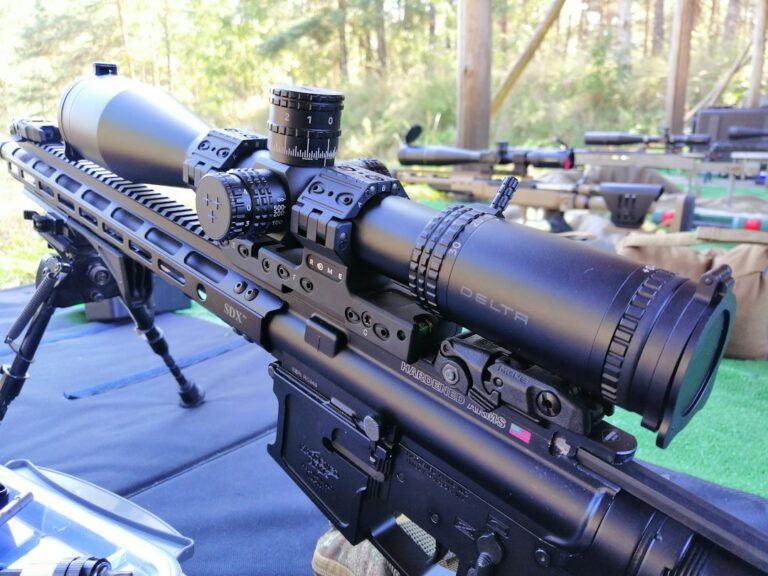
For our .300 Win Mag, this section is paramount. We always start with the date and location of the shooting session. We then note the rifle’s make and model, along with its serial number – a unique identifier. Crucially, we document the barrel length, twist rate, and any modifications or accessories present, such as a specific muzzle brake, suppressor, or custom stock. If we’re using a bipod, tripod, or shooting bag, their type and setup are also recorded. We also track the round count on the barrel since its last cleaning or replacement, as this can significantly impact accuracy over time. Optic details are equally important: scope make, model, magnification setting, and reticle type are noted. If we’ve made any adjustments to the scope’s turrets (e.g., dial for elevation or windage), those initial settings are also recorded before firing the first shot.
Ammunition Component Breakdown
The .300 Win Mag is a handloader’s cartridge, and our data book reflects this reality. We record every component that goes into our ammunition. This includes the bullet manufacturer, type (e.g., Barnes LRX, Nosler AccuBond, Sierra MatchKing), weight in grains (e.g., 180 gr, 200 gr, 220 gr), and lot number. Similarly, we log the powder manufacturer, type (e.g., H4831SC, Retumbo, N565), charge weight in grains, and powder lot number. Primer information – manufacturer, type (e.g., Federal 215M, CCI 250), and lot number – is also critical. Finally, the case manufacturer (e.g., Lapua, Winchester, Nosler) and its lot number are recorded, especially given recent updates like Vihtavuori’s new Lapua .300 Win. Mag. case data. We measure and record the overall cartridge length (COAL) and the bullet seating depth relative to the lands (jump or jam), as these factors profoundly affect pressure and accuracy. Any crimp applied is also noted.
Environmental Conditions and Their Impact
We understand that the environment is an often-overlooked, yet highly influential, variable. Our data book helps us quantify its effects.
Recording Meteorological Data
We always aim to capture the atmospheric conditions at the time of shooting. This includes temperature in degrees Fahrenheit or Celsius, barometric pressure (often corrected to sea level), humidity percentage, and wind speed and direction. We note if the wind is variable or consistent, and estimate its value if no anemometer is available. Information on precipitation (rain, snow, none) and light conditions (bright sun, overcast, dusk) is also logged. These seemingly minor details are crucial for understanding trajectory shifts and refining our ballistic models, especially when shooting our .300 Win Mag at extended ranges where external factors become more pronounced.
Observing Shooter and Range Specifics
Beyond the technical, we acknowledge that human and range variables play a role. We record our shooting position (prone, bench rest, supported), the specific lane or firing point used, and the target distance. We also make note of any unusual events, such as mirage, other shooters’ activities, or even our own physical state (fatigue, alertness). These subjective observations can sometimes provide context for anomalies in our objective data.
Documenting Shot Performance and Results
This is where the rubber meets the road – or rather, the bullet meets the target. We meticulously record the outcome of each shot and each group, transforming raw performance into actionable data that informs our future decisions. This section is the heart of our data book, where we track our progress and identify areas for improvement with our .300 Win Mag.
Group Analysis and Target Specifics
Every group we fire, whether it’s for load development or zero confirmation, receives detailed attention in our data book. We recognize that simply noting “good group” is insufficient; we need quantifiable metrics.
Measuring Group Size and Point of Impact
For each group, we record the number of shots fired. We then measure the extreme spread (ES) of the group, typically from the center of the two farthest bullet holes, either in minutes of angle (MOA), milliradians (mils), or actual physical distance (e.g., inches, centimeters). We also note the average group size for a series of groups. Crucially, we document the group’s point of impact (POI) relative to our point of aim (POA). If the group is high-left, we quantify that deviation (e.g., 1 MOA high, 0.5 MOA left). This helps us track our zero and make precise adjustments. If we’re using a chronograph, we record the muzzle velocity (MV) for each shot and calculate the average velocity (Avg. MV), standard deviation (SD), and extreme spread (ES) for the string. This data is indispensable for refining our ballistic solutions and ensuring consistency, especially when evaluating new load data from sources like Nosler or Sierra.
Recording Target Details and Shot Sequence
We often include a small sketch of the target or a diagram showing the group’s shape and location. If we’re shooting different loads, we label each group clearly on the target and cross-reference it in our data book. We also make notes on the shot sequence within a group: did the first shot land differently than subsequent shots? Was there a flyer, and if so, did we notice anything during the shot process that might explain it? This helps us identify potential issues like barrel harmonics, shooter error, or inconsistent ammunition. We might even record the time interval between shots, especially during rapid-fire drills, to observe how barrel temperature affects POI.
Wind Calls and Adjustment Tracking
Wind is the bane of long-range precision shooting, particularly with a powerful cartridge like the .300 Win Mag. Our data book serves as a vital tool for learning to read and compensate for it.
Documenting Wind Observations and Calls
For every shot taken where wind is a factor, we record our wind call. This includes the estimated wind speed and direction at the firing line, and if possible, any observations of wind conditions downrange (e.g., mirage, flag movement). We note our mental estimation of the required hold-off or turret adjustment. Did we call for 1.5 MOA left correction? Did we use a wind flag at 300 yards? This level of detail helps us correlate our subjective wind calls with the objective outcome on target.
Recording Actual Adjustments and Their Effects
After we’ve made our wind call and fired the shot, we record the actual adjustment applied (e.g., 1.5 MOA left on the windage turret, or a 1.5 MOA hold on the reticle). We then compare the actual point of impact with our intended point of impact, and most importantly, with our wind call. Did our 1.5 MOA left call put us perfectly in the center, or did we need more or less? This feedback loop is crucial for developing our wind-reading skills. By reviewing past entries, we can identify patterns in our wind calls – perhaps we consistently underestimate a crosswind from a certain direction, or our calls are more accurate at certain ranges. This iterative process, documented thoroughly, is how we improve our ability to connect our environmental assessment to precise bullet placement.
Maintaining and Reviewing Your Data Book
A rifle data book isn’t a static archive; it’s a living document that requires ongoing maintenance and regular review to truly unlock its potential. For us, the value of our .300 Win Mag data is not just in its collection, but in its diligent analysis and application. This systematic approach transforms raw entries into actionable insights, driving continuous improvement in our shooting prowess.
Regular Entries and Updates
Consistency is key to the utility of our data book. We don’t just fill it out sporadically; we treat it as an integral part of every range session.
Post-Range Session Data Entry
Immediately following a range session, or at the very latest, within the same day, we dedicate time to completing all entries in our data book. This ensures that details are fresh in our minds, and no critical information is overlooked or forgotten. We transcribe chronograph data, measure groups, and cross-reference our target photos with written notes. If we encountered any issues – a primer failure, a sticky bolt, or an unusual flyer – these are all documented with as much descriptive detail as possible. We also make a note of any maintenance performed on the rifle, such as cleaning regimen, barrel seasoning shots, or scope remounting, since these can all influence subsequent performance. This commitment to prompt and thorough data entry prevents gaps in our knowledge and maintains the integrity of our historical records.
Tracking Component Usage and Inventory
Our data book also serves as a crucial inventory management tool for our handloading components. We maintain a running tally of our bullet, powder, primer, and case usage. Every time we load a batch of ammunition, we update the quantities consumed. This helps us monitor our stock levels, anticipate when we need to reorder specific components, and ensure we always have what we need for our .300 Win Mag loads. It also allows us to track the performance of specific component lots over time. If a particular lot of powder suddenly shows different velocity characteristics, our data book will immediately highlight this deviation, prompting us to investigate further. This systematic tracking is especially important when considering updated data from sources like Barnes or Nosler, as it enables us to compare new recommendations against the performance of our existing inventory.
Analyzing Historical Data and Trends
The real power of our data book emerges when we step back from individual entries and look at the bigger picture. Analyzing historical data helps us understand the long-term behavior of our rifle and ammunition.
Identifying Performance Patterns Over Time
We regularly review our past entries to identify overarching patterns and trends. How does our .300 Win Mag perform in varying temperatures – does it favor colder or warmer conditions? Are there specific loads that consistently group better than others, regardless of the shooter or day? Do we notice a decline in accuracy after a certain number of rounds fired since cleaning, suggesting an optimal cleaning interval? By charting velocities, group sizes, and points of impact across many sessions, we can develop a deeper understanding of our rifle’s personality and preferences. This allows us to make informed decisions about load selection, barrel maintenance, and even environmental preferences for competitive shooting.
Refining Ballistic Coefficients and Doping
Our data book is indispensable for refining our ballistic models. By comparing actual shot placements at various distances and under different environmental conditions against our calculated ballistic solutions, we can fine-tune our assumptions. We look for discrepancies between our predicted and actual drops and wind holds. This feedback loop allows us to make small, incremental adjustments to our bullet’s ballistic coefficient (BC) or our velocity assumptions until our predicted trajectory closely matches reality. For example, if our data consistently shows we are hitting high at 800 yards with a given load, we might slightly reduce the BC in our calculator. This empirical doping, directly derived from our meticulously logged data, is what enables us to consistently make accurate first-round hits with our .300 Win Mag at extended ranges, translating theoretical data into practical, real-world performance.
When it comes to enhancing your shooting accuracy, keeping detailed records is essential, especially for a powerful cartridge like the .300 Win Mag. A related article that offers valuable insights on this topic is “The Importance of Ballistic Data Tracking,” which discusses various methods for recording rifle data effectively. By understanding how to document your shooting performance, you can make informed adjustments to improve your skills. For more information, you can read the article here.
Practical Tips for Your .300 Win Mag Data Book
| Metric | Description | Example Value | Units |
|---|---|---|---|
| Bullet Weight | Weight of the bullet used in the cartridge | 180 | grains |
| Muzzle Velocity | Speed of the bullet as it leaves the barrel | 2950 | feet per second (fps) |
| Powder Charge | Amount of gunpowder used in the cartridge | 55.0 | grains |
| Barrel Length | Length of the rifle barrel | 24 | inches |
| Group Size | Diameter of the shot group at a given distance | 1.25 | inches at 100 yards |
| Zero Range | Distance at which the rifle is sighted in | 200 | yards |
| Environmental Conditions | Temperature, humidity, and wind during shooting | 55°F, 40% RH, 5 mph wind | varies |
| Primer Type | Type of primer used in the cartridge | Large Rifle Magnum | n/a |
| Case Brand | Manufacturer of the cartridge case | Winchester | n/a |
| Notes | Additional observations or comments | Cleaned barrel after 50 rounds | n/a |
For us, managing a data book for a powerful and versatile cartridge like the .300 Winchester Magnum isn’t just about recording; it’s about optimizing the process to maximize its utility. We’ve learned a few practical tips along the way that help streamline our data collection and make the book a more powerful tool for improving our long-range precision. These aren’t just suggestions; they are methods we actively employ to ensure our efforts are efficient and effective.
Structuring Your Data Book Effectively
The physical or digital layout of our data book significantly impacts its usability. A well-organized structure makes data entry quicker and analysis more intuitive.
Choosing the Right Format: Physical vs. Digital
We consider both physical and digital formats for our data books, each with its own merits. A physical notebook offers the undeniable satisfaction of handwritten notes, sketches, and immediate recording without battery concerns. We often opt for durable, weather-resistant notebooks with grid paper for easy diagramming of groups and target impacts. The tactile nature can also aid in recall. However, digital solutions, whether dedicated apps or spreadsheets, offer powerful advantages: easy searchability, automated calculations (like SD and ES for chronographed strings), cloud backup, and the ability to overlay data points on maps or integrate with ballistic calculators. For our .300 Win Mag, we often use a hybrid approach: a small, rugged physical notebook for quick field notes and target sketches, which we then transfer to a more comprehensive digital spreadsheet for long-term analysis and archiving. This allows us to leverage the strengths of both mediums.
Creating Templates for Consistency
To ensure every critical piece of information is captured consistently, we create templates for our data book pages. Whether it’s a pre-printed page in a physical book or a pre-formatted sheet in a digital document, these templates guide our data entry. Sections for rifle details, ammunition components, environmental conditions, group measurements, wind calls, and adjustments are clearly laid out. This eliminates the guesswork of what to record and reduces the chances of missing vital information. For our .300 Win Mag, templates are particularly useful for load development, ensuring we track specific powder charges, bullet seating depths, and chronograph data with each variation. This structured approach, combined with the comprehensive load data pages offered by companies like Sierra and Nosler, allows us to systematically evaluate performance across different component combinations.
Enhancing Data Book Utility
Beyond basic logging, there are several ways we enhance the utility of our data book, turning it into a truly dynamic resource.
Integrating with Ballistic Calculators
Our data book is intrinsically linked to our ballistic calculator. The accuracy of any ballistic solver hinges on precise input data. We use the velocities (Avg. MV, SD) captured by our chronograph and recorded in our data book to refine the velocity profiles in our calculator. Similarly, when we confirm bullet drop at extended ranges with our .300 Win Mag, and our actual impact differs from the calculator’s prediction, our data book provides the empirical evidence needed to adjust our ballistic coefficient or zero offset within the calculator. This constant feedback loop between real-world performance and digital prediction is how we achieve highly accurate long-range firing solutions. Every shot recorded informs and refines our ability to predict the next.
Utilizing Reference Data and Notes
Our data book isn’t just for our own shooting data; it’s also a valuable repository for reference information. We include printouts or handwritten notes of essential .300 Win Mag load data from trusted sources like Vihtavuori, Barnes, Nosler, and Sierra. This allows for quick comparison between our tested loads and published recommendations. We also keep sections for common conversions (e.g., MOA to inches, meters to yards), ballistic tables for specific loads, and notes on observed wind effects at different ranges. We might even include diagrams of our reticle with holdover values or specific rifle maintenance schedules. By centralizing this information, our data book becomes a self-contained resource that supports informed decision-making both at the range and during our load development process, reinforcing the .300 Win Mag’s role as a major long-range cartridge.
FAQs
What is a .300 Win Mag Data Book?
A .300 Win Mag Data Book is a specialized log used by shooters to record important data related to their .300 Winchester Magnum rifle. This includes information such as bullet type, powder charge, environmental conditions, and performance metrics from shooting sessions. The purpose of the data book is to help shooters track their performance and make informed adjustments for future shooting.
Why is it important to record rifle data?
Recording rifle data is crucial for improving accuracy and consistency in shooting. By documenting various factors such as wind conditions, temperature, and elevation, shooters can analyze how these variables affect their performance. This information allows for better load development, helps identify trends, and ultimately leads to more precise shooting.
What kind of information should be included in a .300 Win Mag Data Book?
A comprehensive .300 Win Mag Data Book should include details such as the date of the shooting session, weather conditions, bullet specifications (weight, type, and manufacturer), powder type and charge weight, seating depth, and the results of each shot (group size, point of impact). Additionally, notes on any adjustments made to the rifle or scope should also be recorded.
How can I use the data collected in my .300 Win Mag Data Book?
The data collected in your .300 Win Mag Data Book can be used to analyze performance trends over time. By reviewing past entries, you can identify which loads perform best under specific conditions, allowing you to refine your shooting technique and ammunition choices. This information can also be invaluable for preparing for competitions or hunting trips, ensuring you are well-equipped for success.
Are there specific formats or templates for a .300 Win Mag Data Book?
Yes, there are various formats and templates available for a .300 Win Mag Data Book. Some shooters prefer to use printed templates that include designated sections for all relevant data, while others may opt for digital formats or apps that allow for easy data entry and analysis. The choice of format often depends on personal preference and the level of detail desired.