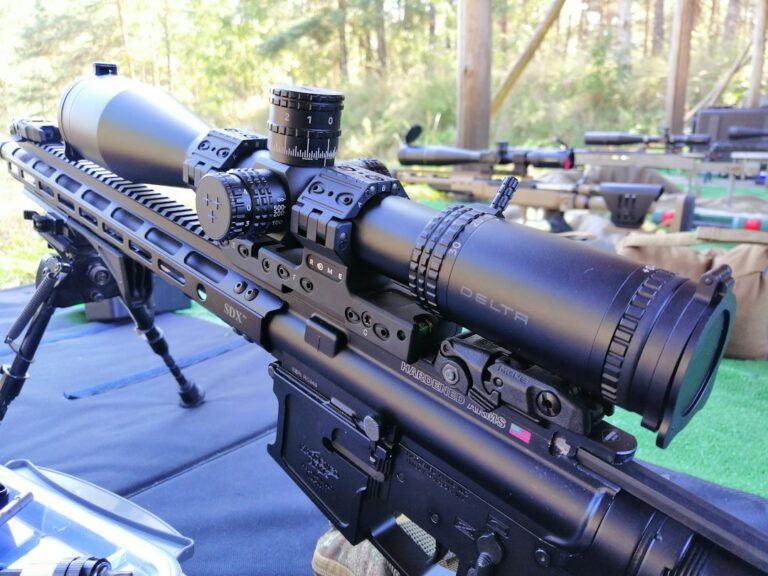
Building a Foundation: Mastering the Fundamentals
We often hear the adage that “Rome wasn’t built in a day,” and the same absolutely applies to achieving long-range accuracy with the mighty .300 Winchester Magnum. Before we even contemplate engaging targets at a thousand yards or more, we, as responsible and effective long-range shooters, must dedicate ourselves to meticulously building and reinforcing our fundamental skills. This isn’t just a suggestion; it’s a non-negotiable prerequisite for consistent success and, frankly, for enjoying the process without constant frustration. Our collective experience has taught us that overlooking these foundational elements leads to chasing our tails at extended ranges, wondering why our carefully calculated dope isn’t landing where it should.
Initial Zeroing and Velocity Confirmation
Our journey into long-range precision always begins with a precise zero. For the .300 Win Mag, this usually means a 100 or 200-yard zero, establishing a reliable baseline for all subsequent ballistic calculations. We meticulously confirm this zero, ensuring our point of aim truly corresponds to our point of impact under controlled conditions. This isn’t a one-and-done affair; temperature changes, ammunition lot variations, and even minor shifts in optics mounting can subtly alter our zero, so we make it a habit to confirm it periodically.
Equally critical, and often underestimated by novices, is confirming our muzzle velocity. Ballistic calculators, while incredibly powerful tools, are only as accurate as the data we feed them. The advertised velocity on a box of ammunition is merely an average, and our specific rifle, barrel length, and even environmental conditions can lead to variations. We utilize a chronograph to measure actual muzzle velocity for our chosen ammunition. We’ll fire a minimum of five to ten shots, recording each velocity, and then average these readings to get a true, personalized velocity for our rifle and ammunition combination. This confirmed velocity, along with our precise zero, forms the bedrock of our ballistic profile, allowing us to accurately predict bullet drop and wind deflection at increasing distances. Without these two pieces of verified data, our attempts at long-range accuracy will be akin to navigating a dense fog without a compass.
Grouping and MOA Tracking at Moderate Distances
Once our zero is confirmed and our velocity established, we resist the urge to immediately stretch our legs to extreme distances. Instead, we focus on consistency at what we consider comfortable, yet challenging, moderate ranges. For us, this typically means starting at 200 to 400 yards. Our primary objective here is to shoot consistent, tight groups, and, crucially, to track these groups in Minutes of Angle (MOA), not just inches.
We begin with five-shot groups at 100 yards as a diagnostic. We measure the extreme spread of these groups and convert them into MOA. For example, if our five-shot group measures 0.75 inches at 100 yards, that translates to 0.75 MOA – an excellent starting point. The reason we track in MOA is simple: it normalizes group size across different distances. A 1 MOA group at 100 yards means a 1-inch group; that same 1 MOA group at 500 yards means a 5-inch group. By consistently tracking in MOA, we gain a clear, objective measure of our rifle’s precision potential and, more importantly, our own shooting consistency.
As we consistently achieve sub-MOA or near-MOA groups at 100 yards, we then extend our range incrementally. We move to 200 yards, then 300, and finally 400 yards, always focusing on maintaining that tight MOA group size. This gradual progression allows us to isolate variables. If our groups suddenly open up significantly at 300 yards, we can reasonably infer that it’s likely due to a minor shift in our fundamental technique, a slight miscalculation in dope, or perhaps the introduction of wind, rather than an inherent inaccuracy in our rifle at 100 yards. This structured approach prevents us from becoming overwhelmed and allows for targeted improvement.
For those looking to enhance their skills with the .300 Win Mag, a related article that provides valuable insights on optimizing long-range accuracy can be found at 300wm.com. This resource offers a variety of training drills specifically designed to improve marksmanship and precision, making it an essential read for both novice and experienced shooters aiming to master this powerful cartridge.
Advanced Marksmanship: Trigger, Optics, and Position
With the fundamental building blocks firmly in place, we turn our attention to refining the more nuanced aspects of marksmanship that are absolutely critical for connecting with targets at extended distances with the .300 Win Mag. This involves a deep dive into trigger control, the effective use of our precision optics, and the establishment of stable shooting positions that can withstand the recoil and precision demands of this powerful cartridge.
Reinforcing Trigger and Follow-Through Control
The criticality of trigger control cannot be overstated, especially when sending heavy bullets downrange with the .300 Win Mag. Any flinching, jerking, or anticipating the shot will manifest as significant deviations at 1,000 yards. Our drills focus on a smooth, consistent, and surprise break. We practice dry-firing extensively, ensuring our reticle remains perfectly still through the entire trigger press.
Beyond the actual trigger press, follow-through is equally vital. We impress upon ourselves the importance of maintaining cheek weld, sight picture, and reticle tracking not just through the shot, but for a solid 2-3 seconds after the shot. This practice allows us to observe the bullet’s impact, or at least where it should impact, and provides invaluable feedback. If we break our position too early, we lose the opportunity to spot our own shot, making corrections for subsequent rounds much more difficult. We visualize the bullet trajectory, maintaining our focus on the target even as the rifle recoils, allowing our brain to register that critical visual data. This ingrained habit of a patient, extended follow-through is a hallmark of truly precise long-range shooting.
Mastering Optic Use and Parallax
Our precision optics are sophisticated tools, and to leverage their full potential, we must understand and master their various features. This includes understanding the intricacies of our reticle, whether it’s an MOA or Mil-dot system, and how to effectively use its holdovers for elevation and windage. We spend considerable time practicing ranging with our reticle, using known target sizes to estimate distances, even when a laser rangefinder is available. This builds a crucial backup skill and sharpens our visual estimation.
A particularly critical aspect of optic use for long-range accuracy is parallax management. Parallax is an apparent shift in the reticle’s position relative to the target when our eye moves, leading to errors. We meticulously adjust our parallax knob for the specific distance we are engaging. Our drills involve rapidly acquiring a target, adjusting parallax until the reticle appears “fixed” on the target no matter how slightly we move our head, and then taking the shot. We learn to feel and see when parallax is correctly adjusted, eliminating a significant source of error at extended ranges. Shooters-observers communication is also practiced here, ensuring the spotter can accurately relay impact corrections based on what they observe through their spotting scope, often using the same reticle system as the shooter. This symbiotic relationship between shooter and observer is paramount for efficiency and accuracy.
Positional Fundamentals for Extended Engagements
While bench rest shooting is excellent for initial zeroing and data collection, long-range engagements in the real world rarely occur from such a pristine setup. Therefore, developing stable and repeatable positional fundamentals is essential. We practice shooting from various positions – prone, kneeling, sitting, and even supported standing – always striving for maximum stability.
For prone, our preferred and most stable position, we focus on establishing a natural point of aim that aligns the rifle with the target without muscular tension. We ensure proper bipod loading, consistent shoulder pocket placement, and a relaxed, yet firm, grip. We also practice building improvised rests using backpacks, rocks, or other available terrain features, adapting to our environment. The key is repeatability. Every time we get into a position, we strive to achieve the same body mechanics, ensuring consistency from shot to shot. This muscle memory, developed through repeated practice, allows us to transition seamlessly between positions and maintain a high degree of accuracy even when not shooting from a perfect bench rest. For engagements beyond 500 yards, where slight positional instabilities are amplified, these fundamentals become the difference between a hit and a miss.
Conquering the Elements: Wind Reading and Environmental Factors
Once we’ve refined our shooting mechanics, the next great challenge in long-range shooting with the .300 Win Mag presents itself: the environment, specifically the wind. Understanding and compensating for wind is arguably the most complex and variable aspect of long-range precision. A perfect shot with perfect dope will still miss if the wind is misjudged. Our training places significant emphasis on developing acute wind-reading skills and accounting for other environmental factors.
Practical Wind-Reading Drills
We approach wind reading not as a theoretical exercise, but as a practical, sensory skill developed through observation and confirmation. Our drills actively focus on real-world cues. We spend considerable time observing mirage – the shimmering heat waves rising from the ground – as one of our primary indicators. We learn to interpret its speed, direction, and angle to estimate wind velocity and direction at different points along the bullet’s path.
Beyond mirage, we train ourselves to identify and interpret other crucial wind indicators. Vegetation, from swaying grass to bending tree branches, provides obvious clues. We look for dust swirling on the ground, the ripple on a water source, or even the movement of small flags strategically placed downrange. Our drills involve setting up targets with varied terrain in between, forcing us to read multiple wind flags and calculate an average, or “weighted,” wind value across the entire bullet trajectory. We practice calling wind values, applying corrections to our scope, and then confirming impacts. If our shot misses due to wind, we analyze why our initial call was incorrect, adjusting our interpretation for the next shot. This iterative process, constantly calling, shooting, and correcting, is how we build our intuitive understanding of how wind affects our bullet.
Accounting for Terrain and Environmental Nuances
Wind is rarely a uniform force. Terrain plays a significant role in how wind behaves, creating swirling eddies, funnels, and dead spots. We actively incorporate this into our training. We select shooting ranges with varied terrain – hills, valleys, open fields, and areas with buildings or dense vegetation – to expose ourselves to a multitude of wind scenarios. We learn to predict how wind will behave as it travels over a ridge, through a cut, or around an obstruction. A seemingly light breeze at our firing point might be a strong crosswind downrange due to terrain features.
Beyond wind, we also account for other environmental factors. Barometric pressure, temperature, and humidity all influence bullet trajectory, albeit to a lesser extent than wind. Modern ballistic calculators incorporate these variables, but we still make it a habit to input current environmental data before any serious shooting session. We understand that a shot taken on a cold, high-pressure day will not behave identically to one taken on a hot, humid day, even with the same rifle and ammunition. Our drills reinforce the habit of checking these environmental conditions and making necessary adjustments to our ballistic profile, ensuring our dope remains as precise as possible under varying atmospheric conditions.
Long-Range Application: Pushing the Envelope
Having diligently built our fundamental skills, mastered our equipment, and developed a keen sense for environmental factors, we are now ready to truly push the capabilities of the .300 Win Mag to its limits. This section focuses on applying all we’ve learned to engagements at extreme distances, refining our data, and engaging in dynamic, complex scenarios.
Extending Distance Gradually and Data Refinement
As per our training philosophy, extending distance is always a gradual process. We never jump directly from 400 yards to 1,000 yards. Instead, we move incrementally: 500, then 600, 700, and so on. At each new distance, our objective is to achieve consistent groups that prove our accuracy. We rely heavily on our confirmed velocity and ballistic calculator, but we understand that real-world data trumps theoretical predictions.
Our drills involve shooting groups at these extended ranges, recording our actual impacts, and comparing them to our predicted ballistic data. If there are discrepancies, we refine our ballistic profile. This might mean making small adjustments to our ballistic coefficient (BC) or even fine-tuning our velocity slightly to better match real-world bullet drop. This process of “truing” our ballistic data is crucial. We maintain a detailed logbook, meticulously recording all environmental conditions, our dope, and the actual point of impact for each shot. This historical data becomes an invaluable resource for future shooting sessions, helping us build a robust and highly accurate ballistic profile for our rifle and ammunition. We continually confirm that the .300 Win Mag, with its heavy, high-BC bullets, is indeed capable of 1,000+ yard performance, which is why it’s such a common choice for long-range training.
Shooter-Observer Communication and Spotting
At extreme distances, effective communication between the shooter and the observer (spotter) becomes absolutely paramount. The spotter, utilizing a high-quality spotting scope, is the shooter’s eyes and ears downrange. Our drills heavily emphasize seamless, clear, and concise communication. The spotter calls the shot, indicating where the bullet impacted relative to the target, and provides immediate corrections to the shooter. This includes elevation adjustments (e.g., “Add 0.5 MIL”) and windage adjustments (e.g., “Move 0.3 MIL left”).
We practice standardized communication protocols to ensure clarity and avoid misinterpretations. The spotter also provides continuous wind calls, alerting the shooter to any changes in wind speed or direction that might occur between shots. The shooter, in turn, acknowledges the corrections and makes the necessary adjustments to the optic. This dynamic feedback loop allows for rapid target engagement and minimizes the number of follow-up shots required. We understand that a skilled spotter is not just an accessory, but an integral part of the long-range shooting team, especially when pushing beyond 800 yards where bullet flight time is extended and wind values can change dramatically.
For those looking to enhance their shooting skills, a valuable resource is the article on “Essential Techniques for Long-Range Shooting,” which provides insights into various methods that complement training drills for .300 Win Mag long-range accuracy. By integrating the techniques discussed in this article, shooters can significantly improve their precision and consistency. You can read more about these techniques by visiting Essential Techniques for Long-Range Shooting.
Sustaining Accuracy: Maintenance and Continuous Improvement
| Drill Name | Distance (yards) | Objective | Number of Shots | Expected Group Size (MOA) | Notes |
|---|---|---|---|---|---|
| Zero Confirmation | 100 | Confirm zero and rifle stability | 5 | 0.5 | Ensure consistent point of impact before long-range drills |
| Minute of Angle (MOA) Practice | 300 | Practice precision shooting within 1 MOA | 10 | 1.0 | Focus on breathing and trigger control |
| Wind Reading Drill | 500 | Adjust for wind drift and holdover | 10 | 1.5 | Use flags or natural indicators to estimate wind |
| Elevation Adjustment Drill | 700 | Practice elevation hold and adjustments | 8 | 2.0 | Record adjustments and verify hits |
| Long-Range Precision | 1000 | Test overall accuracy and consistency | 10 | 2.5 | Use ballistic calculator for adjustments |
| Moving Target Engagement | 300-500 | Improve tracking and lead estimation | 5 | Varies | Simulate real-world scenarios |
Achieving long-range accuracy with the .300 Win Mag is not a destination, but an ongoing journey. To sustain the high level of precision we demand, we integrate consistent rifle maintenance and a philosophy of continuous improvement into our training regimen. Our collective experience has shown that neglecting these aspects will inevitably lead to a degradation of performance.
Rifle Maintenance and Ammunition Consistency
A precision rifle, especially one chambered in .300 Win Mag, requires meticulous care to maintain its accuracy. Our drills implicitly incorporate proper cleaning procedures. We understand that excessive copper fouling can degrade accuracy, but so can aggressive or improper cleaning techniques. We develop a cleaning regimen that is effective yet gentle, focusing on the bore, chamber, and action. We regularly inspect our optics, mounts, and action screws, ensuring everything remains tight and secure. Any loose component can introduce significant error at long range.
Beyond the rifle itself, ammunition consistency is a critical factor. While we rely on factory ammunition for training, we recognize the inherent variations between lots and manufacturers. For critical long-range engagements, many of us choose to handload, meticulously controlling every variable: bullet seating depth, powder charge, primer selection, and case preparation. Even with factory ammunition, we perform lot-testing, ensuring that any new batch performs to the same accuracy standards as our established “known good” ammunition. Our training emphasizes the importance of consistency in every component of the shooting system, down to the very cartridge we feed our rifle.
Diagnostic Practice and Skill Refreshers
Finally, we believe in continuous self-assessment and skill refreshers. Our training isn’t just about pushing limits; it’s also about maintaining proficiency at all distances. We regularly return to our foundational drills – 100-yard grouping, velocity confirmation, and moderate-range consistency – to ensure our basic skills haven’t atrophied. If we notice a decline in performance at extended ranges, we immediately revert to these diagnostic drills to identify the root cause.
We incorporate “stress drills” where we might be required to engage multiple targets at varying distances under a time constraint, or transition rapidly between shooting positions. These drills push our mental and physical limits, simulating real-world scenarios and exposing weaknesses in our technique or decision-making. We document our performance, review our data, and identify areas for improvement. This iterative process of training, evaluation, and adjustment ensures that we are not just proficient, but continually striving for excellence in our pursuit of long-range accuracy with the .300 Win Mag. We understand that the moment we stop learning and refining, we start falling behind.
FAQs
What is the .300 Win Mag cartridge commonly used for?
The .300 Win Mag cartridge is widely used for long-range shooting, hunting large game, and competitive shooting. Its high velocity and flat trajectory make it suitable for taking down animals at extended distances, making it a popular choice among hunters and marksmen.
What are some effective training drills for improving long-range accuracy with the .300 Win Mag?
Effective training drills include the following: 1) Dry firing to improve trigger control, 2) Shooting from various positions (prone, sitting, standing) to enhance stability, 3) Using a ballistic calculator to understand bullet drop and windage, and 4) Practicing follow-up shots to improve reaction time and accuracy under pressure.
How important is understanding ballistics for .300 Win Mag shooters?
Understanding ballistics is crucial for .300 Win Mag shooters as it helps them predict bullet trajectory, wind drift, and drop over distance. Knowledge of ballistic coefficients and environmental factors allows shooters to make informed adjustments for accurate long-range shooting.
What equipment is recommended for training with the .300 Win Mag?
Recommended equipment includes a quality rifle with a suitable scope, a bipod or shooting rest for stability, a rangefinder for distance measurement, and a ballistic calculator or app. Additionally, using quality ammunition specifically designed for long-range performance is essential for effective training.
How can shooters track their progress in long-range training?
Shooters can track their progress by maintaining a shooting log that records details such as distance, wind conditions, ammunition used, and shot placement. Regularly reviewing this data helps identify areas for improvement and allows shooters to adjust their training drills accordingly.