We, as dedicated long-range shooters, constantly strive for perfection in our craft. The elusive one-hole group, the perfectly aligned string of impacts – these are the benchmarks we chase. Yet, sometimes, despite our best efforts, we encounter a frustrating phenomenon: horizontal stringing. Instead of a tight cluster, our shots spread out left and right across the target, defying our attempts at precision. This isn’t merely an annoyance; it’s a critical issue that compromises our ability to hit distant targets reliably. Understanding the root causes of horizontal groups is paramount to diagnosing the problem and implementing effective solutions. We’ve dedicated countless hours to dissecting this very challenge, observing, experimenting, and cross-referencing our findings with the collective wisdom of the shooting community. What follows is a distillation of our knowledge, focusing on the primary culprits behind those infuriating left-to-right deviations.
Atmospheric Influences on Horizontal Trajectory
When we send a projectile downrange over significant distances, it’s no longer just us and the rifle; the atmosphere becomes an active participant in its journey. The air isn’t a static, uniform medium; it’s a dynamic environment that can profoundly influence the bullet’s horizontal path, leading to those frustratingly wide groups we sometimes observe.
Wind’s Unseen Hand
Perhaps the most obvious and frequently discussed atmospheric factor is wind. Wind drift is a horizontal deflection of the bullet caused by the lateral movement of air molecules. As the bullet travels, it’s constantly interacting with these air currents. Even a gentle breeze, seemingly negligible at the firing line, can exert a significant force on a bullet over hundreds or thousands of yards. We’ve all experienced those days where flags are barely fluttering, but our impacts are consistently pushed several minutes of angle (MOA) to one side. The impact of wind is directly proportional to its speed and the duration of the bullet’s flight. Longer distances mean more time for the wind to act upon the projectile, thus amplifying its horizontal displacement. Furthermore, wind isn’t always constant; it can swirl, gust, and change direction along the bullet’s flight path, making accurate compensation a constant challenge. We must not only estimate wind speed and direction at our position but also attempt to read it across the entire range, a task that demands acute observation and experience. Ignoring or misjudging wind is, in our collective experience, a prime cause of frustratingly wide horizontal groups, transforming what should be a tight cluster into a scattered line across the target face.
The Coriolis Effect’s Subtle Cousin: Spin Drift
While less commonly discussed in casual shooting circles than wind, spin drift is another atmospheric factor that subtly but consistently influences a bullet’s horizontal path. Unlike wind, which is an external force, spin drift is an inherent consequence of the bullet’s gyroscopic stability imparted by the rifling. As the bullet spins, it creates a pressure differential around its surface. For a right-hand twist barrel, which is common, the top of the bullet moves right while the bottom moves left relative to the air. This causes slightly higher air pressure on the right side and lower pressure on the left, resulting in a gentle, consistent push to the right for right-hand twist bullets. Conversely, a left-hand twist barrel would cause a push to the left. This effect is very small at shorter ranges but becomes increasingly noticeable as distance increases. We sometimes overlook spin drift because it’s a consistent, predictable force, unlike the erratic nature of wind. However, when we are chasing extreme precision, particularly at very long ranges, failing to account for spin drift will result in a consistent horizontal offset, contributing to a wider group if we are not adjusting our hold or turrets accordingly. It’s a subtle force, yes, but one that adds to the cumulative horizontal factors we must contend with.
For those interested in understanding the factors that contribute to horizontal groups in long-range rifle shooting, a related article that delves deeper into the intricacies of ballistics and shooting techniques can be found at 300wm.com. This resource provides valuable insights into the physics of bullet flight, environmental influences, and the importance of proper shooting form, all of which are crucial for improving accuracy and consistency in long-range shooting.
Shooter and Rifle Interface Issues
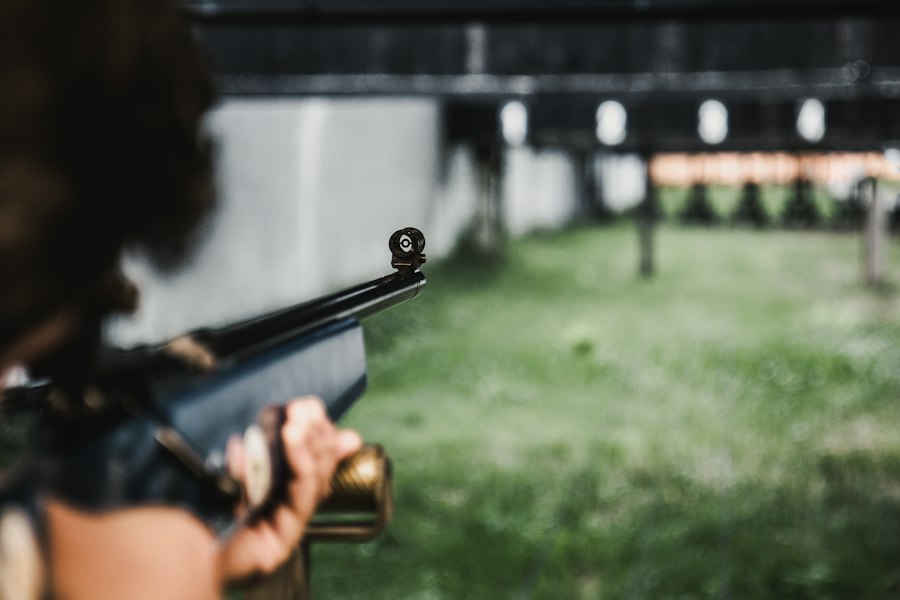
The interaction between the shooter and the rifle is a complex dance, and any misstep can manifest as horizontal deviations on the target. We’ve often observed that even with perfect ammunition and ideal conditions, a breakdown in fundamental shooting technique or an issue with the rifle’s setup can introduce significant lateral spread. Our consistency at the firing line is as crucial as the rifle’s inherent accuracy.
The Perils of Rifle Cant
Perhaps one of the most insidious and often overlooked causes of horizontal grouping is rifle cant. When we tilt the rifle even slightly, the scope’s reticle no longer aligns perfectly with the bullet’s actual trajectory and the vertical plane of gravity. Imagine a perfectly vertical crosshair. If we tilt the rifle to the right, that vertical line now points slightly to the right at the top and left at the bottom. When we then adjust for elevation, we’re not moving the point of impact straight up or down relative to the target, but rather along the angled axis of the canted rifle. The bullet, however, is still subject to gravity pulling it straight down. The result? A horizontal shift in the point of impact. If we cant the rifle consistently to the right, our shots will consistently hit left. If we cant it consistently to the left, our shots will hit right. Furthermore, if our cant is inconsistent from shot to shot, sometimes tilted one way, sometimes the other, or varying in degree, it will inevitably lead to a wider horizontal spread in our groups. We emphasize the use of a good anti-cant device, such as a bubble level, and consistent body position to minimize this effect. Even a few degrees of cant can mean inches of deviation at long range, and that adds up quickly in a horizontal group.
Trigger Control: The Moment of Truth
The act of pressing the trigger is the final physical interaction we have with the rifle before the shot breaks, and it is a critical determinant of accuracy. Any deviation from a smooth, straight-back press can induce horizontal movement of the rifle, even if miniscule, at the precise moment of firing. We’ve seen it countless times: a shooter “jerking” the trigger, pulling it sharply to the side instead of straight back. This lateral force, however slight, can cause the muzzle to move horizontally just as the firing pin strikes the primer. The result is an immediate, often unconscious, shift in the point of aim. Similarly, a “slap” of the trigger, where the finger hits the trigger violently rather than pressing it smoothly, can also introduce unwanted horizontal motion. The key to mitigating this is a consistent, deliberate, and smooth trigger press, isolating the trigger finger’s movement from the rest of the hand and arm. Practicing dry firing, focusing purely on a straight-back press without disturbing the sight picture, is invaluable. A poorly executed trigger press is a common culprit for those frustrating flyers that appear far left or right of the main group.
Grip, Cheek, and Shoulder Pressure
The way we hold and support the rifle, often referred to as our interface or contact points, is paramount to consistent shot placement. Uneven or inconsistent pressure at these points can introduce subtle forces that push the rifle horizontally at the moment of recoil or even just before the shot breaks. For instance, if we grip the rifle too tightly with our firing hand and apply a constant inward pressure, the muzzle may tend to pull slightly to that side. Similarly, inconsistent cheek weld pressure, where our cheek presses harder on one side of the stock than the other, can torque the rifle. The shoulder pocket, too, plays a vital role. If we load the rifle unevenly into the shoulder, perhaps with more pressure on the inner or outer edge of the buttpad, the rifle’s recoil impulse might not be perfectly straight back. Instead, it could kick slightly sideways, affecting the initial launch angle of the bullet. We strive for a neutral, consistent, and repeatable hold – one where the rifle is supported firmly but without any undue lateral pressure from our body. The goal is to allow the rifle to recoil as naturally and linearly as possible, minimizing any induced horizontal deflection. Any variation in these contact points from shot to shot will inevitably contribute to a wider horizontal spread.
Establishing a Natural Point of Aim
One of the foundational principles we constantly reinforce is the importance of confirming a natural point of aim (NPOA). NPOA refers to the alignment of our body with the rifle such that, when we are relaxed, the rifle naturally points at the target. If our body is twisted, strained, or fighting to hold the rifle on target, that tension will inevitably manifest as inconsistencies. Imagine setting up for a shot and having to physically muscle the rifle left or right to align the reticle with the bullseye. That tension will be present throughout the shot sequence and can cause the rifle to drift back to its “natural” (but incorrect) point of aim as the shot breaks or during recoil. This leads to horizontal displacement of the impacts. We teach shooters to get into position, acquire the target, close their eyes for a moment, relax their body, and then reopen their eyes. If the reticle is no longer on target, they should adjust their body position (their feet, hips, and shoulders), not just the rifle, until the rifle naturally settles on target without any muscular effort. Failing to confirm NPOA is a common and insidious cause of horizontal stringing, as our body’s attempt to fight its natural alignment introduces lateral forces into the shooting platform.
Equipment and Setup Instabilities

Even the most skilled shooter employing perfect technique will struggle with horizontal groups if their equipment isn’t up to par or is improperly set up. The rifle system is a chain, and a weak link anywhere in that chain can introduce inconsistencies that manifest as unwanted lateral movement. We painstakingly scrutinize every component of our setup to ensure maximum stability and repeatability.
Loose Gear and Hardware Woes
The stability of our shooting platform is paramount for consistent accuracy. Any loose component in the rifle system can introduce subtle shifts that translate to horizontal deviations downrange. We’ve encountered situations where a loose scope mount screw, even one that felt “snug,” allowed for microscopic movement of the optic during recoil. This means that from shot to shot, the reticle might be pointing slightly differently relative to the barrel, leading to an unpredictable horizontal spread. Similarly, loose action screws can allow the barreled action to shift slightly within the stock, disrupting the harmonic interaction between the two and affecting barrel harmonics, which can certainly impact horizontal POI. Even the bipod or rest we use must be scrutinized. If the bipod legs aren’t locked tightly, or if the connection to the rifle is wobbly, the rifle’s recoil can cause it to shift horizontally. We always ensure all screws (scope rings, scope base, action screws, bipod mount) are torqued to manufacturer specifications. Furthermore, unstable shooting bags or rests that allow for too much lateral movement can also contribute significantly to inconsistent horizontal grouping. A solid, stable foundation for the rifle is non-negotiable for achieving consistent horizontal precision.
The Dynamics of Barrel Harmonics and Ammunition
While not exclusively a cause of horizontal groups, issues related to the barrel and ammunition can certainly degrade overall group quality and sometimes exacerbate horizontal spread. Barrel harmonics refer to the way the barrel vibrates during the bullet’s passage. Every barrel has a unique vibrational pattern, and if this pattern isn’t consistent or if external factors interfere with it, it can affect the precise exit angle of the bullet. Fouling, the accumulation of carbon and copper in the bore, changes the internal dimensions and surface texture of the barrel, which can alter harmonics and affect bullet flight, leading to shifts in point of impact. Similarly, variations in barrel temperature, especially during rapid firing strings, can cause the barrel to expand or contract unevenly, subtly altering its shape and thus its harmonic behavior.
Ammunition consistency is also critical. Variations in bullet weight, powder charge, primer ignition, or even the seating depth of the bullet can lead to differences in muzzle velocity and barrel time. These inconsistencies can cause the bullet to exit the barrel at slightly different points in its harmonic cycle, resulting in varied vertical and horizontal displacement. While often presenting as overall group enlargement, these factors can certainly contribute to a wider horizontal spread if the inconsistencies push the bullet’s exit angle laterally. We routinely monitor our barrel for excessive fouling, allow it to cool between strings, and use only high-quality, consistent ammunition to minimize these variables.
Recoil Management and Follow-Through
The moments immediately following the shot are often as crucial as the moments preceding it. How we manage recoil and maintain our sight picture, or “follow through,” can significantly impact where subsequent shots land, particularly in terms of horizontal consistency. This is where the art of shooting truly merges with the science.
Inconsistent Recoil Absorption
Every rifle generates recoil, and how we absorb and manage that recoil significantly affects where the next shot will go. If our recoil absorption is inconsistent, meaning we absorb it differently from shot to shot – sometimes leaning into it more, sometimes allowing the rifle to move more freely, or if our shoulder pressure shifts – the rifle will not return to the exact same position or attitude. This inconsistent return to battery can lead to horizontal shifts. For example, if we torque our body to one side to absorb recoil, the rifle might settle back into a slightly different horizontal plane for the next shot. We strive for a relaxed yet firm hold, allowing the rifle to recoil primarily straight back into our shoulder, and then returning it naturally and consistently to the target. Any flinching or anticipating recoil by pushing the rifle forward or to the side will invariably lead to horizontal stringing. The goal is to let the rifle do its thing, and then guide it back to the aiming point with minimal lateral interference.
Maintaining Proper Follow-Through
Follow-through is the continuation of our shooting process after the shot has broken. It involves maintaining our natural point of aim, keeping our head on the stock, our eye through the scope, and our trigger finger reset, even as the rifle recoils. If we immediately lift our head, shift our body, or drop our concentration the moment the shot fires, we lose track of the rifle’s recoil path and its return to target. This can make it difficult to spot our impact, but more importantly, it means we aren’t guiding the rifle back to the exact same aiming point for the next shot. An inconsistent or nonexistent follow-through can introduce subtle horizontal shifts. For instance, if we drop our shoulder prematurely, the rifle might not settle back into the exact same horizontal alignment. We emphasize staying “in the gun,” observing the recoil cycle, and dry firing through the shot until the reticle settles back on target. This consistent commitment to follow-through ensures that each shot is initiated and completed under the same, controlled conditions, minimizing any self-induced horizontal deviations between shots.
In exploring the intricacies of long-range rifle shooting, understanding the phenomenon of horizontal groups is essential for improving accuracy and consistency. A related article that delves deeper into the factors influencing shot placement is titled “Understanding Ballistics: The Key to Precision Shooting.” This resource offers valuable insights into how environmental conditions, rifle setup, and shooter technique can all contribute to the formation of horizontal groups. For those looking to enhance their shooting skills, this article can be found here.
External Influences and Environment
| Cause | Description | Impact on Horizontal Grouping | Mitigation Strategies |
|---|---|---|---|
| Wind Drift | Crosswinds push the bullet sideways during flight. | Significant horizontal deviation, causing wider groups. | Use wind flags, adjust scope windage, and time shots during calm conditions. |
| Trigger Pull | Improper or inconsistent trigger squeeze causing lateral movement. | Shooter-induced horizontal shifts in shot placement. | Practice smooth trigger control and use a consistent technique. |
| Barrel Harmonics | Vibrations of the barrel during firing affecting bullet exit angle. | Can cause horizontal dispersion if not tuned properly. | Use barrel tuners and consistent ammunition to minimize effects. |
| Scope Mounting | Improperly mounted or loose scope causing shifts in point of aim. | Random horizontal shifts between shots. | Ensure secure, level mounting and check zero regularly. |
| Parallax Error | Misalignment of the reticle and target image at different eye positions. | Apparent horizontal shifts in aiming point. | Adjust scope parallax settings and maintain consistent eye position. |
| Wind Reading Errors | Incorrect estimation of wind speed or direction. | Improper windage adjustments leading to horizontal spread. | Use multiple wind indicators and practice wind reading skills. |
| Rifle Cant | Tilting the rifle left or right during shooting. | Causes horizontal deviation in bullet impact. | Use a bubble level and maintain consistent rifle orientation. |
While we often focus on our technique and equipment, we must also acknowledge that the broader shooting environment can present unique challenges that exacerbate or directly cause horizontal grouping. These are factors sometimes beyond our immediate control, but understanding them allows us to compensate or adapt.
Mirage and Optical Distortions
At long ranges, especially on warm days or over uneven terrain, heat shimmer, or mirage, becomes a significant factor. Mirage is caused by varying densities of air due to temperature differences, which refract light and make the target appear to move or waver. While often perceived as a vertical phenomenon, mirage can also create the illusion of horizontal movement, especially if the air layers are moving horizontally across the line of sight. We might perceive the target shifting left or right, leading us to subconsciously adjust our aim horizontally, resulting in actual shifts in bullet impact. We learn to “read the mirage,” not fight it, understanding its direction and speed to compensate or to shoot between the waves. Ignoring it, or misinterpreting its movement, can certainly contribute to a wider horizontal spread as we chase a moving target that isn’t truly moving.
Uneven Terrain and Firing Line Setups
The physical environment from which we shoot can also play a subtle but significant role. If we are shooting from uneven ground, or if our bipod/rest setup is not perfectly level, it can introduce rifle cant without us even realizing it. Imagine setting up a bipod on a slight incline; even if the rifle initially appears level, the natural settling of the bipod legs or the shooter’s body weight might introduce a slight cant. Similarly, if the surface we are shooting from (e.g., a bench) is not perfectly stable or level, it can transmit vibrations or uneven forces to the rifle, leading to inconsistent horizontal shot placement. We always make a conscious effort to ensure our shooting position is as level and stable as possible, using shims under bipod legs or adjusting our body position to mitigate any unevenness in the terrain. Overlooking these environmental nuances can subtly introduce horizontal deviations into our otherwise perfect shooting form.
In conclusion, the causes of horizontal groups in long-range rifle shooting are multifaceted, ranging from external atmospheric forces to minute details of our shooting technique and equipment setup. We’ve learned that wind and spin drift are fundamental external factors that push our bullets sideways. Internally, rifle cant is a silent killer of precision, while imperfect trigger control and inconsistent pressure points from our grip, cheek, and shoulder can induce lateral shifts. Neglecting a natural point of aim also forces us to fight the rifle, leading to horizontal struggles. Furthermore, loose components in our gear or an unstable shooting platform can introduce unpredictable lateral movement, and while not always horizontal, barrel and ammo issues can certainly degrade overall group consistency. Even after the shot, inconsistent recoil management and poor follow-through contribute to shot-to-shot variations. Finally, external influences like mirage and uneven terrain can fool our eyes and compromise our position. By meticulously addressing each of these potential culprits, from understanding atmospheric physics to refining our shooting fundamentals and ensuring a rock-solid equipment setup, we can progressively shrink those frustrating horizontal spreads and move closer to the singular pursuit of true precision.
FAQs
What are horizontal groups in long-range rifle shooting?
Horizontal groups refer to a pattern of bullet impacts on a target that are aligned horizontally, indicating that the shots are consistently hitting at similar vertical levels but varying horizontally. This can be a sign of issues with the shooter’s technique, equipment, or environmental factors.
What causes horizontal stringing in rifle shooting?
Horizontal stringing can be caused by several factors, including improper sight alignment, inconsistent trigger pull, or variations in the shooter’s stance. Additionally, environmental conditions such as wind can also contribute to horizontal dispersion of shots.
How does wind affect horizontal groups in long-range shooting?
Wind can significantly impact bullet trajectory, especially at long distances. If the wind is blowing consistently from one side, it can push the bullets off course horizontally, leading to a pattern of shots that are grouped together horizontally rather than vertically.
Can ammunition quality influence horizontal grouping?
Yes, the quality of ammunition can greatly influence horizontal grouping. Variations in bullet weight, powder charge, and overall cartridge consistency can lead to inconsistent performance, resulting in horizontal stringing on the target.
What adjustments can be made to reduce horizontal groups?
To reduce horizontal groups, shooters can focus on improving their shooting technique, such as ensuring proper grip and trigger control. Additionally, using high-quality ammunition, adjusting the rifle’s scope for windage, and practicing in varying wind conditions can help achieve tighter horizontal groupings.